In the transportation sector, load securement is no longer optional. Poor securement damages goods, and you have to face insurance problems as well. Additionally, it irritates your clients and creates delays. Cargo comes undamaged, and drivers are safer when your loads are securely fastened. The entire operation runs better. But there is more to cargo securement than just safety. Strict guidelines must be followed, and there are severe penalties for breaching them.
So, to avoid damage, this blog shares practical tips for load securement. You can use it for better safety and transportation.
Why Load Securement Matters
Load securement is more than a checklist item. It is a safeguard for everyone on the road. When cargo shifts, it puts drivers and warehouse staff at risk. It puts the public in danger as well. Proper securement reduces the chance of rollovers and falling loads. It lowers the risk of injuries in the workplace, too. Your brand’s reputation also depends on it.
And it is not just about safety. When the load is properly safeguarded, operations continue as scheduled, which leads to fewer delays and fewer claims. Less damaged cargo means more reliable schedules and lower expenses. Overall, load security increases the safety of people and keeps logistics running well.
Published in Safety Journal (2025), this peer‑reviewed study analyzes accident risks and highlights how unsecured cargo contributes to road incidents and logistics losses.
Understanding Load Securement Basics
Definition of Load Securement
Load securement means the use of equipment and methods that help to keep cargo in place during the entire shipping process. The aim is to reduce the possibility of damage and delays and to stop loads from moving or falling. Straps, chains, binders, and blocking devices are often used tools for cargo security. Each tool is designed to hold freight steady.
Regulatory Standards
- The Federal Motor Carrier Safety Administration (FMCSA) sets U.S. rules for securing cargo on trucks.
- The Occupational Safety and Health Administration (OSHA) ensures workplaces are safe, including how cargo is handled and secured.
- FIBC bags are manufactured to ISO standards, ensuring proper design, testing, and safety factors that keep transportation secure.
Practical Load Securement Tips for All Modes of Transport
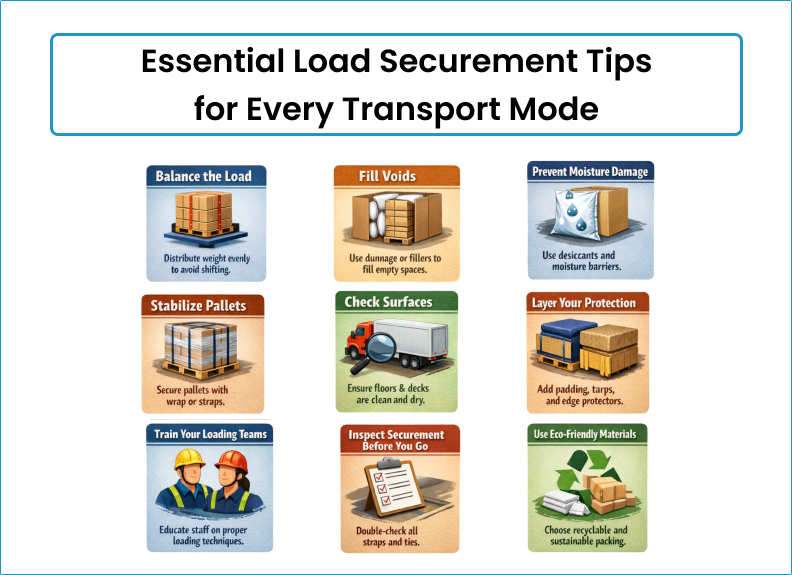
- Balance the Load: You can distribute the weight equally on your vehicle. When your loads are uneven, it can shift or put stress on axles. Cargo securement starts with how you place the cargo.
- Fill Voids: Fill gaps so cargo does not slide or tip. You can use Dunnage airbags, void fillers, honeycomb packaging, or blocking materials to fill the gaps. They keep your load steady and decrease bumps during shipping.
- Stabilize Pallets: You can wrap, strap, or band pallets tightly so nothing comes loose. For bulky products, use FIBC bulk bags or reinforced wraps for extra strength.
- Check Surfaces: Make sure the floors and pallets are clean. Also, check that the container walls are dry. When a base is clean, it provides better grip with straps and airbags, and everything stays as it is.
- Prevent Moisture Damage: When you are shipping sensitive products, they need more protection. Use moisture‑resistant packaging or liners. Add desiccants for extra help. Dunnage bags with barrier films can also block unwanted exposure.
- Layer Your Protection: Combine methods for extra security. Add airbags, belts, and wraps to create layers of safety, so even if cargo shifts, it stays protected.
- Inspect Securement Before You Go: Double‑check straps and fillers before driving. Recheck them at transfer points. Keep an eye on leaky airbags or loose bands. Check for worn-out void fillers as well.
- Train Your Loading Teams: Make sure your loading team understands how to place items and inflate bags correctly. Teach proper fastening techniques. Skilled workers secure cargo with dunnage bags.
- Use Eco‑Friendly Materials: Use recyclable or reusable dunnage airbags and void fillers. It will keep your load safe and also cut down on waste.
Struggling with shifting loads during transit? Read our complete guide: Dunnage Air Bag Best Practices: A Step‑by‑Step Cargo Securement Guide
Step‑by‑Step Load Securement Process
Step ❶: Choosing the Right Securement Tools
Choose tools that actually suit the cargo. If you want to fill the gaps, dunnage airbags are an effective way to keep everything steady inside a container. If you have fragile goods to ship, Honeycomb packaging helps with durable yet lightweight panels and secures items from sliding around. FIBC bulk bags support powders, grains, and other bulk materials.
Step ❷: Place and Distribute the Load
Balance matters when moving goods. Spread the weight equally so the vehicle stays steady without tipping or straining. Fill empty spaces with void fillers to keep cargo from moving during transport.
Step ❸: Secure Everything
Use straps, netting, or other methods to secure the load. Ensure fastening fits the cargo’s type and weight. Keep it consistent from start to finish.
Step ❹: Do a Final Safety Check
Check airbags, fillers, belts, and wraps before leaving. Recheck at every stop and adjust anything loose.
Main Benefits of Proper Load Securement
- Safer cargo with fewer accidents.
- Faster loading and unloading.
- Lower costs from fewer claims and less product loss.
- Meeting regulations and avoiding fines or penalties.
Looking for ways to cut product damage and lower freight costs? Learn how in How Dunnage Bags Reduce Product Damage and Shipping Costs
Common Mistakes in Load Securement
- When you overlook void fillers and leave empty spaces in containers, there are more chances that your cargo will shift during transit.
- When you use damaged or punctured dunnage bags that can not withstand pressure, the load does not stay stable.
- When you ignore equal weight distribution of the load, it puts stress on vehicles and increases the risk of tipping or accidents.
Advanced Load Securement Solutions
Smart sensors for monitoring cargo movement
Smart sensors now enable you to monitor your cargo throughout the transportation journey. If something moves or the pressure inside a container changes, the system sends an alert on the go. It helps teams to take action fast and fix issues before they turn into real problems or accidents.
AI‑driven logistics planning
AI‑driven logistics planning analyzes routes and cargo types. It also calculates how much each vehicle can handle. With this information, you can plan loads properly. It also decreases human mistakes.
Integration of Honeycomb Packaging and eco‑friendly FIBC Bulk Bags
You can use honeycomb panels to keep your items stable during transit. FIBC bulk bags work well for grains and powders. When you choose eco-friendly materials, you are protecting goods as well as the environment.
Choosing the Right Load Securement Partner
What to Look For
- You need a good partner who actually understands and follows industry standards like AAR, DOT, and FMCSA. Sticking to these standards keeps your cargo safe and out of legal trouble.
- The best companies also use modern tools like composite cord straps, smart packaging, and eco-friendly solutions. They keep loads steady and help you cut down on waste.
- Experience matters, too. If they have worked across different industries and their products actually stop damage, that is a good sign you can count on them.
Why Dunnage Systems Inc. Stands Out
Dunnage Systems Inc. products meet AAR, DOT, and FMCSA requirements, so you do not have to worry about fines and penalties. Our composite cord straps and anti‑slip rubber mats follow strict transport standards.
We offer advanced packaging solutions:
- We help you stretch wrap that stretches up to 300% and secures loads tightly.
- Our Anti-slip rubber mats are made from recycled tires, which helps you cut loading time in half.
- We offer corner boards and tier sheets that are light, reusable, and better for the environment.
- We offer composite cord straps that handle moisture, chemicals, and rust, as well as absorb shock.
People trust Dunnage Systems Inc. because we deliver durable and cost-effective cargo protection. Our products keep loads from shifting and prevent damage, whether you are shipping by rail, truck, or intermodal. Moreover, we help you work faster and smarter.

What Happens If You Choose the Wrong Partner
- If your partner ignores the rules, you need to face regulatory fines and legal issues.
- If your partner uses old, outdated technology, it leads to lost products and slowdowns.
- If they do not have a solid track record, you will have more damaged cargo and bigger insurance bills.
To Summing Up
Choosing the right load securement partner is not just about buying products. It is about protecting your people, your shipments, and the way your business runs day to day. The right partner brings real expertise with compliance, the latest tools, and a solid track record for keeping cargo safe. That is what Dunnage Systems Inc. brings to the table. Our solutions meet all the right transport standards, utilize durable, modern materials, and companies across various industries trust them to reduce damage and keep costs low.
Secure loads mean safer roads, smoother operations, and fewer risks. Companies that secure cargo avoid fines and cut costs. They also build trust with customers.
Effective load securement means safety and compliance. A skilled partner keeps shipments intact and schedules steady. They also build business trust.