In mining operations, the method you choose to transport your mined minerals and ores contributes highly to your net profit. Using high-quality FIBC Bulk Bags is one of the smartest ways to transport materials and keep the expenses under control.
While companies mainly keep their focus on the price of fuel consumed and the price of equipment, the cost of labor often emerges as the biggest expense. If your team is spending too much time managing small sacks and cleanup operations, you are facing losses every single hour.
If you’re new to industrial packaging, explore our guide on What Are FIBC Bulk Bags? Types and Benefits to understand how they work and where they’re used.
Why Moving Mining Materials is So Expensive
Mining processes require the extraction of large quantities of heavy, unprocessed materials from the earth. Many companies use rigid drums or small bags to store and move the mined materials. But the problem with that is that workers have to carry them up and stack them one on top of the other on their own. This process is not only slow, but it also causes fatigue and sometimes heavy injuries too.
Another disadvantage of this traditional way of transporting these mining materials is that these packages break easily. A single broken sack results in loss of material, more payment for cleaning staff and more wastage of time that should have been spent on production. And, in a fast-paced working environment, every minute a worker spends on a non-productive task is a loss in profit for the company.
4 Ways FIBC Bulk Bags Save You Money on labor

Move More Material with Fewer People
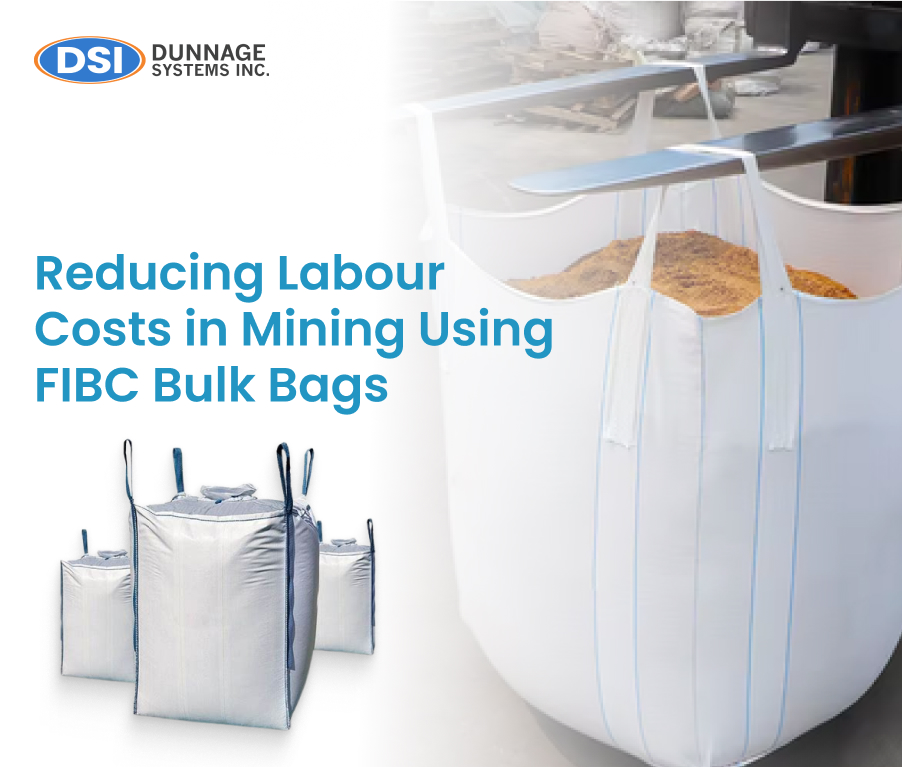
The primary benefit of a bulk bag is its ability to contain large quantities of materials. One large FIBC bag has the capacity to store up to 5000 pounds of mining material. A forklift operator can move one bulk bag faster than a team of workers who have to transport several 100-pound sacks by hand or by using small carts. Bulk handling enables your team to complete the same amount of work in less time, with a much smaller team.
Faster Filling and Emptying
The tops and bottoms of FIBC bags are specially designed (like spout tops and discharge spouts) that support rapid filling and emptying. In a mining site, you can just hook the bag to the machine and the bag will be filled quickly. These industrial dunnage bags can be emptied easily through the bottom spout. The process eliminates the need for workers to cut open multiple small bags manually, which is a time-consuming and repetitive task.
Easier Storage and Organization
Generally, mining sites are very messy and crowded. If an ordinary bag is kept in these conditions, its shape will get deformed and there will be a risk of falling down of bags that are stacked one over another. But this is not the case with FIBC bulk bags.
The FIBC bulk bags are designed in a way that they keep their shape even when they are stacked. This helps in load securement and it also keeps the storage area organized. Such organized spaces make it easier for workers to do their work quickly and with fewer errors.
To prevent damage and extend usability, follow best practices for properly storing FIBC bulk bags to maximize their lifespan.
Reducing Cleanup Time
If you have ever seen a paper sack tear in a mine, you know how much mess they can create. Mining materials are dusty and granular, which takes a lot of time and effort to clean up. But the air dunnage bag manufacturers produce these bags from heavy-duty woven polypropylene, an incredibly tough material that can withstand multiple punctures, making them the best choice for hardcore operations.
Improving Safety to Lower Hidden labor Costs
A safe workplace is not just about keeping our workers safe. It is also about reducing the losses. Injuries of workers lead to compensation claims, lost workdays and the need to hire and train temporary replacements.
The industrial sector experiences its highest number of back injuries because workers lift the heavy sacks manually. The use of forklifts and cranes to lift and transport industrial dunnage bags keeps the workers safe and on the job, avoiding the hidden expenses that come with workplace accidents.
Why FIBC Bulk Bags are a Smart Investment for Mining Companies
Doing More with Less Equipment
The efficient design of these bags eliminates the need for different types of specialized vehicles to transport your products. A simple forklifts equipped with lifting hooks provide sufficient operational capacity in such operations. This allows you to spend more money on core mining machinery and less on auxiliary transport tools.
Lowering Shipping and Storage Costs
Rigid metal containers and plastic drums require a huge space to be stored. But the FIBC bulk bags are very lightweight and can be folded into flat shapes that occupy almost no space. The product allows for safe stacking, which enables users to increase storage capacity within one truck or shipping container. This greatly decreases the total number of shipments required.
Minimizing Product Waste and Spills
Every pound of ore in mining operations contains monetary worth. The strength of air dunnage bags guarantees that all contents will remain inside the bag at all times. These bags help you build a system that protects your products from all types of environmental damage, including moisture and contamination, which directly results in more profit.
A Durable Solution That Lasts
The durability of paper bags is very low and they can only be used for one time. But, because FIBCs bags are manufactured with high-quality material, they can be used multiple times. These bags can withstand the harsh environment of a mine and rough transportation through trucks.
Learn more about optimizing storage and transport with our guide on How FIBC Bulk Bags Reduce Packaging Costs and Improve Efficiency.

Get High-Performance FIBC Bulk Bags from Dunnage System Inc.
When it comes to protecting your cargo and your budget, Dunnage Systems Inc. is the partner you need. We provide mining companies with specially designed FIBC Bulk Bags that can handle extreme industrial conditions. These bags are designed to withstand the abrasive and heavy-duty nature of mining operations, which include handling heavy ores, minerals and fine aggregates.
Dunnage Systems Inc. delivers bags that offer strength, versatility and practical functionality. Mining businesses require proper equipment for load securement and effective material handling. By offering bags of various designs, like U-Panel, Circular and Baffled bags, we ensure safe and hassle-free loading and movement of your minerals and ores.
In case you are shipping your mined materials across the country, you might need extra protection and stability. That’s why we manufacture industrial dunnage bags or shipping air bags that keep the cargo tightly packed, even during rapid movement.
Conclusion
Reducing labor costs in the mining industry doesn’t always require a million-dollar technology upgrade. Sometimes, a simple change in a package can lead to significant money savings. The heavy-duty FIBC Bulk Bags from Dunnage Systems Inc. enable your business to transport greater quantities of material at faster rates while protecting worker safety and reducing spill cleanup expenses to almost nothing.