If you have spent any time sourcing dunnage air bags, you already know that every supplier on the internet claims to be the best. The best quality. The best pricing. The best service. At some point those claims all start to sound the same, and the only way to actually tell the difference is to know what to look for before you place an order.
The wrong manufacturer does not just send you the wrong bag. It sends you inconsistent products on reorders, leaves you without support when a compliance question comes up, runs long lead times that leave your dock short on supply, and adds a distributor markup that you do not need to be paying. None of that shows up in a marketing claim.
This guide gives you the seven evaluation criteria that separate a reliable dunnage air bags manufacturer from one that will create problems down the line, plus the red flags to watch for and the questions to ask before any bulk order is placed.
Why the Manufacturer You Choose Matters Beyond the Product Itself
Most buyers evaluate dunnage air bag suppliers the same way they evaluate any commodity purchase: price, lead time, minimum order quantity. Those are valid factors. But they are not the whole picture, and buying on price alone without assessing the manufacturer behind the product is how freight operations end up with bags that do not match the spec on the second order, or certification documents that cannot be produced when a carrier audit requires them.
The best dunnage air bags manufacturer for your operation is not necessarily the one with the lowest unit price. It is the one who supplies the right product consistently, backs it with certification documentation, helps you spec the right bag before you order, and delivers reliably without surprises on repeat orders. That combination is what protects your cargo, your compliance standing, and your procurement budget over the long term.
Here is what to look for.
7 Things to Look for in the Best Dunnage Air Bags Manufacturer
Not every manufacturer checks all seven of these boxes. The ones who do are the ones worth working with. Run any prospective supplier through this list before you place your first order.
1. Product Range: Kraft Paper and Polywoven Options
A manufacturer who only offers one material type is limiting your options before the relationship even starts. Your freight operation may need different solutions for different applications, and a supplier who cannot cover both leaves you sourcing from multiple vendors, which adds complexity and cost.
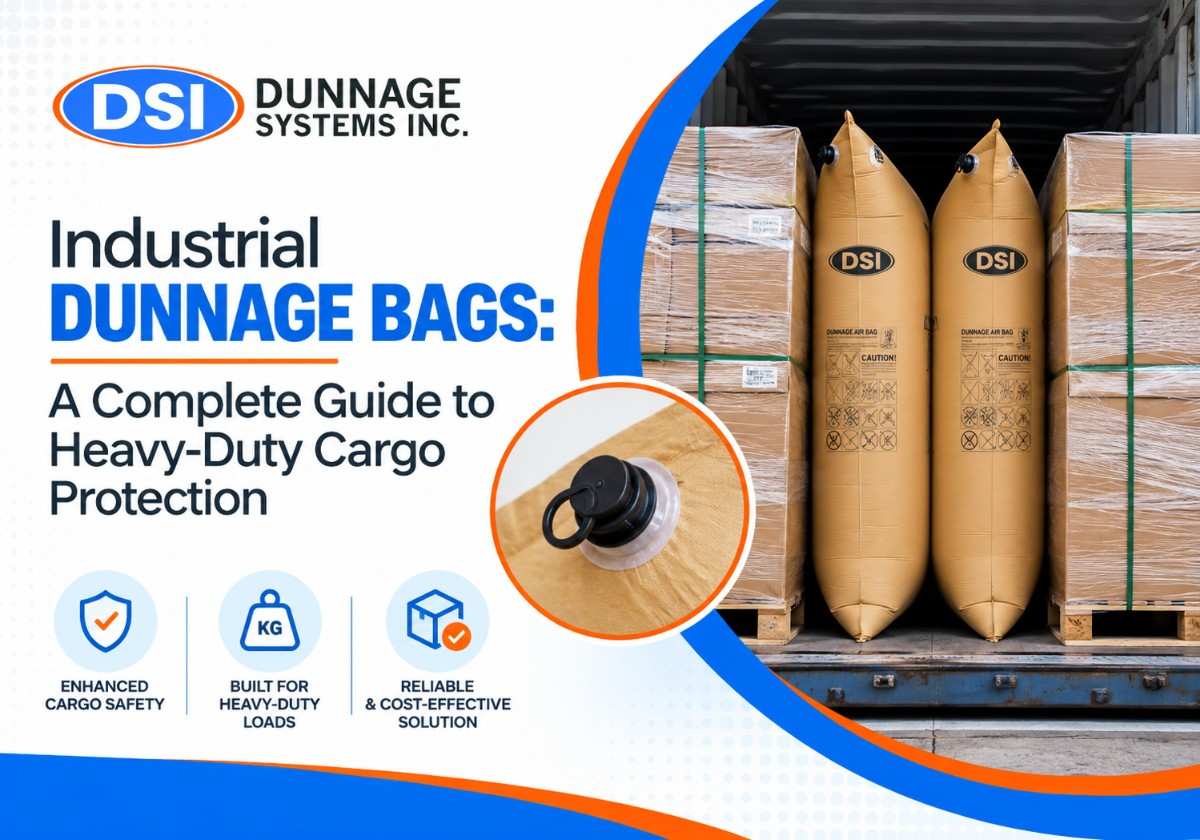
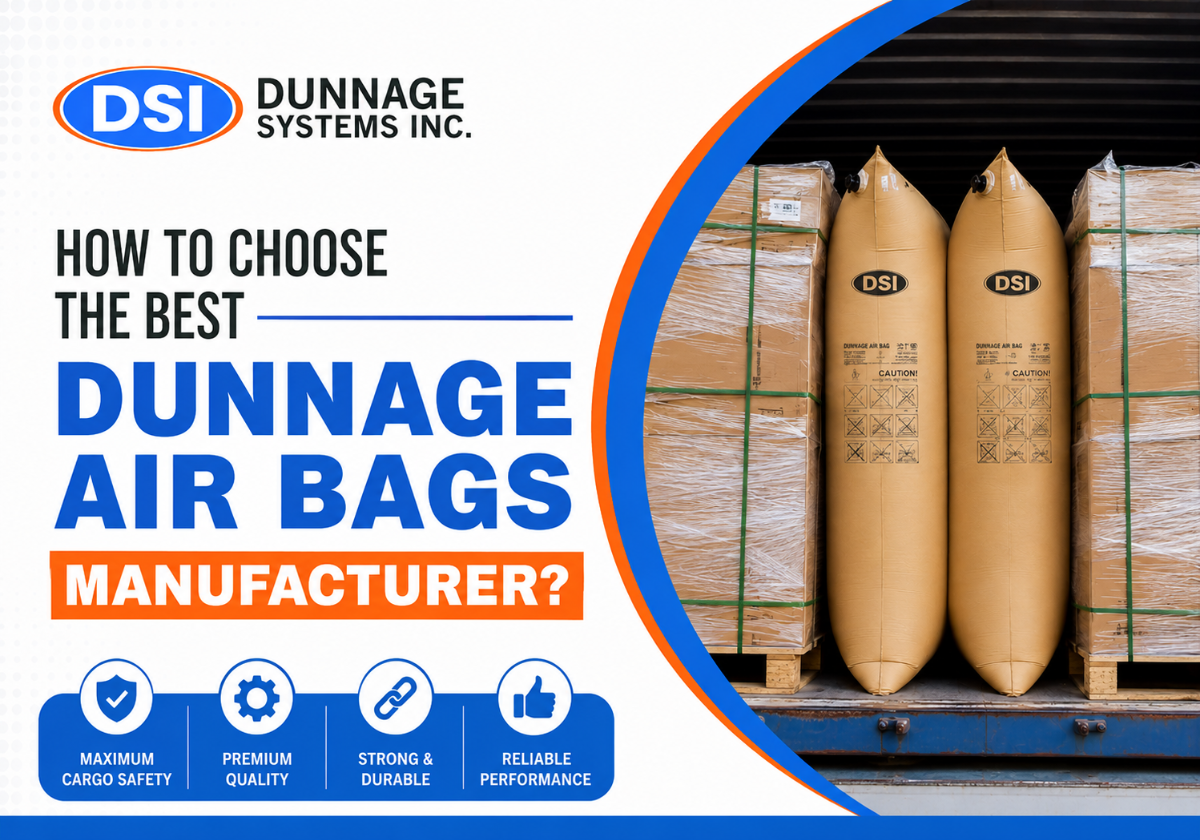
Kraft paper dunnage bags are the right choice for single-use, high-volume truck operations where cost per shipment is the priority. They are available in 2-ply through 8-ply constructions, recyclable after use, and effective for a wide range of standard freight applications.
Polywoven dunnage bags are built for reusable, moisture-resistant, and heavy-duty applications in rail, intermodal, and ocean container freight. They are rated Level 0 through Level 5 and carry AAR certification for full rail compliance.
A manufacturer who supplies both material types from a single source simplifies procurement, ensures consistent quality standards across your full product range, and gives you the flexibility to match the right bag to each application without switching suppliers.
2. AAR Certification Across the Full Product Line
AAR certification is not optional for rail applications, and a legitimate manufacturer will have documentation ready before you ask for it. The Association of American Railroads requires certified load securement products in railcar applications. Using non-certified bags creates compliance risk and can void damage claims if a carrier disputes liability after an incident.
What separates a reliable manufacturer from a questionable one is not just whether their products are certified but how readily they can produce the documentation. A supplier who needs time to track down certification papers is a supplier who does not handle compliance systematically. Ask for it upfront. A good manufacturer will have it ready.
Certification should also apply across the full product line, not just selected SKUs. If a manufacturer can only produce documentation for some of their bags, that is a procurement risk for any operation where rail applications are part of the mix.
3. Custom Sizing Capability
Standard catalog sizes cover most common freight applications. They do not cover all of them. Non-standard container configurations, unusual trailer types, and specialized load profiles often produce void dimensions that fall outside what a standard bag catalog offers.
A manufacturer who can only supply catalog sizes is a manufacturer who will tell you to use the closest standard option and hope it works. That is not good enough for operations where precise void coverage is a performance requirement. Ask directly whether custom sizing is available, what the minimum order quantity for custom dimensions is, and how lead times compare to standard products.
A manufacturer with genuine custom sizing capability can build to your exact void specifications without premium lead times that disrupt your procurement schedule.
4. Direct Supplier Pricing Without Distributor Markup
The difference between buying from a manufacturer and buying through a distributor is the markup layer that sits between the product cost and your invoice. That markup applies at every volume level and compounds across a full year of purchasing. For pallet and truckload buyers, the annual cost difference between direct pricing and distributor pricing can be significant.
Not every supplier who presents themselves as a manufacturer actually is one. Some are trading companies or distributors who buy from manufacturers and resell with a margin added. Ask directly whether you are buying from the manufacturer or a reseller. A genuine manufacturer will be able to tell you exactly where and how the product is made.
Buying direct also simplifies the supply chain. Fewer intermediaries mean faster communication, cleaner problem resolution when something needs to be addressed, and a direct relationship with the team that actually controls product quality and consistency.
5. Free Specification Support Before the Order
A manufacturer who helps you select the right product before you buy is worth more than one who simply takes your order and ships whatever you ask for. Pre-sale specification support is the clearest signal that a supplier understands their product and cares whether it actually works for your application.
Specification support means reviewing your void dimensions, confirming the right bag size, matching the material and level to your freight mode and cargo weight, and flagging anything that suggests your initial selection might not be the best fit. It is not a sales call. It is a technical conversation that protects your operation from ordering the wrong product at scale.
If a supplier responds to a quote request with a price and a delivery date without asking a single question about your load, that is a signal about how they will handle every subsequent interaction as well.
6. Consistent Spec Delivery on Repeat Orders
The first order is always a sample of what working with a manufacturer will actually look like. What matters for a long-term procurement relationship is whether the second order, the tenth order, and the fiftieth order all arrive to the same specification as the first.
Specification inconsistency on repeat orders is more common than buyers expect, particularly from suppliers who source materials from multiple production runs or use substitution practices when a specific component is unavailable. A manufacturer with genuine quality control processes validates spec consistency across every outbound shipment, not just the initial sample order.
Ask about QA processes before you commit to a supplier. A manufacturer who cannot explain how they validate spec consistency on reorders is a manufacturer who cannot guarantee it.
7. Domestic Inventory and Reliable Lead Times
Long lead times from overseas production expose your operation to stock-out risk. When a lane ramps up unexpectedly or a product run depletes inventory faster than anticipated, a supplier with domestic stock can respond in days rather than weeks. A supplier relying on overseas production cannot.
For US freight operations, a manufacturer with US-based inventory and distribution is a meaningful operational advantage. It means faster response times on urgent orders, more predictable delivery windows, and less exposure to international shipping delays that are entirely outside your control.
Vendor managed inventory programs take this a step further. The right manufacturer will monitor your consumption rate and replenish stock automatically so your dock is never short on product regardless of how demand fluctuates across your freight lanes.
Red Flags to Watch for When Evaluating Manufacturers
These are the signals that a manufacturer is not worth the relationship, regardless of how competitive their initial pricing looks.
Vague or unavailable certification documentation
If a supplier cannot produce AAR certification papers on request without delay, assume the certification is either incomplete or unverifiable. Do not take their word for it when compliance documentation is a regulatory requirement for your application.
No pre-sale specification support
A supplier who responds to every quote request with a price without asking about your void dimensions, freight mode, or cargo weight is a supplier who is not set up to help you get the right product. That approach will cost you more in wrong orders than you save on unit price.
Distributors presenting as manufacturers
A distributor adds a markup layer between you and the actual manufacturer. If a supplier cannot clearly explain where and how their product is made, ask directly. Price comparisons between a genuine manufacturer and a distributor rarely favor the distributor once you account for the full cost over a year of purchasing.
Single material type only
A supplier who only offers kraft paper or only offers polywoven is not equipped to cover your full range of freight applications. As your operation grows or your freight mix changes, you will need both. A supplier who cannot provide both will eventually create a gap in your supply chain.
Questions to Ask Before Placing Your First Bulk Order
These five questions separate manufacturers who are set up to serve a serious freight operation from those who are not.
- Can you provide AAR certification documentation for the specific bags I am ordering, and can you have it to me before the order is placed?
- Do you manufacture both kraft paper and polywoven dunnage bags, and can you supply both from the same order?
- Will you review my void dimensions and freight mode before recommending a product, and is that support included at no charge?
- What is your QA process for ensuring spec consistency on repeat orders, and has the product specification ever changed between order cycles without buyer notification?
- Do you hold domestic inventory in the United States, and what is your standard lead time from order to delivery for pallet and truckload quantities?
Why Dunnage Systems Inc. Is the Right Manufacturing Partner
Dunnage Systems Inc. has been a direct supplier of dunnage air bags to freight operations across the United States since 1992. Over 30 years in the business means they have built their operation around the seven criteria above, not as marketing claims but as the actual standards they hold every order to.
Dunnage air bags from Dunnage Systems Inc. are available in both kraft paper and polywoven constructions, with AAR certification documentation included for every rail-eligible product. Their team provides free specification support before every order, confirms the right material and level for your freight mode, and backs every shipment with the same spec as the last one. No substitutions. No surprises on reorders.
Here is what you get when you work with Dunnage Systems Inc.:
- Kraft paper dunnage bags in 2-ply through 8-ply constructions for single-use truck applications
- Polywoven dunnage bags rated Level 0 through Level 5 for rail, intermodal, and ocean freight
- AAR certified products with full compliance documentation available before the order
- Custom sizing for non-standard void dimensions across both material types
- Free pre-sale specification support to confirm the right product for your load
- Direct supplier pricing with no distributor markup at any volume level
- Consistent spec delivery on every repeat order with no substitution practices
- US-based inventory with same-day quote response and reliable domestic lead times
- Vendor managed inventory program for operations that require automatic replenishment
- Delivery across all 50 states in pallet and truckload quantities
Call (870) 942-4830 or visit dunnagesystems.com to get a same-day quote and talk through your requirements with their team.
Frequently Asked Questions
What should I look for in a dunnage air bags manufacturer?
The seven most important factors are: a full product range covering both kraft paper and polywoven options, AAR certification across the product line with documentation available upfront, custom sizing capability, direct supplier pricing without distributor markup, free pre-sale specification support, consistent spec delivery on repeat orders, and domestic inventory with reliable lead times. A manufacturer who checks all seven of these boxes is one worth building a long-term procurement relationship with.
Is it better to buy dunnage air bags direct from a manufacturer or through a distributor?
Buying direct from the manufacturer is almost always the better choice for pallet and truckload buyers. It removes the distributor markup that applies at every volume level, gives you direct access to the technical team who controls product quality, and simplifies problem resolution when something needs to be addressed. Distributors add cost and an additional communication layer without adding value for most freight operations.
How do I know if a dunnage air bag supplier is actually a manufacturer?
Ask directly where and how the product is made. A genuine manufacturer will be able to explain their production process, their quality control standards, and where their raw materials come from. They will also be able to produce AAR certification documentation without delay. A distributor or trading company typically cannot provide that level of product visibility.
Do dunnage air bag manufacturers offer custom sizes?
The best ones do. Non-standard void dimensions are common across specialized containers, unusual trailer configurations, and industrial freight applications. Dunnage Systems Inc. offers custom sizing across both kraft paper and polywoven product lines for operations whose void requirements fall outside standard catalog dimensions.
What is a vendor managed inventory program for dunnage air bags?
A vendor managed inventory program is an arrangement where the manufacturer monitors your consumption rate and automatically replenishes your dunnage bag supply before you run short. It removes the administrative burden of tracking stock levels and placing reorders, ensures your dock never runs out of product during high-volume periods, and is typically available through direct supplier relationships. Dunnage Systems Inc. offers a vendor managed inventory program for qualifying accounts.