
Heavy industrial freight is unforgiving. A shifted pallet of consumer goods is a problem. A shifted load of steel coils, automotive components, or bulk chemicals in a railcar is a serious incident. The forces involved in industrial freight transit are significantly higher than standard truck shipments, the cargo values are greater, and the consequences of load failure extend well beyond a damage claim.
Standard dunnage bags handle standard loads. Industrial freight needs industrial-grade protection. That means higher level ratings, stronger material construction, AAR-certified products for rail compliance, and a supplier who understands the specific demands of heavy-duty freight before recommending a single product.
This guide covers everything freight managers in heavy industry need to know about industrial dunnage bags, from material type and level selection to the specific industries that rely on them and how to match the right bag to every load.
What Are Industrial Dunnage Bags and Who Needs Them?
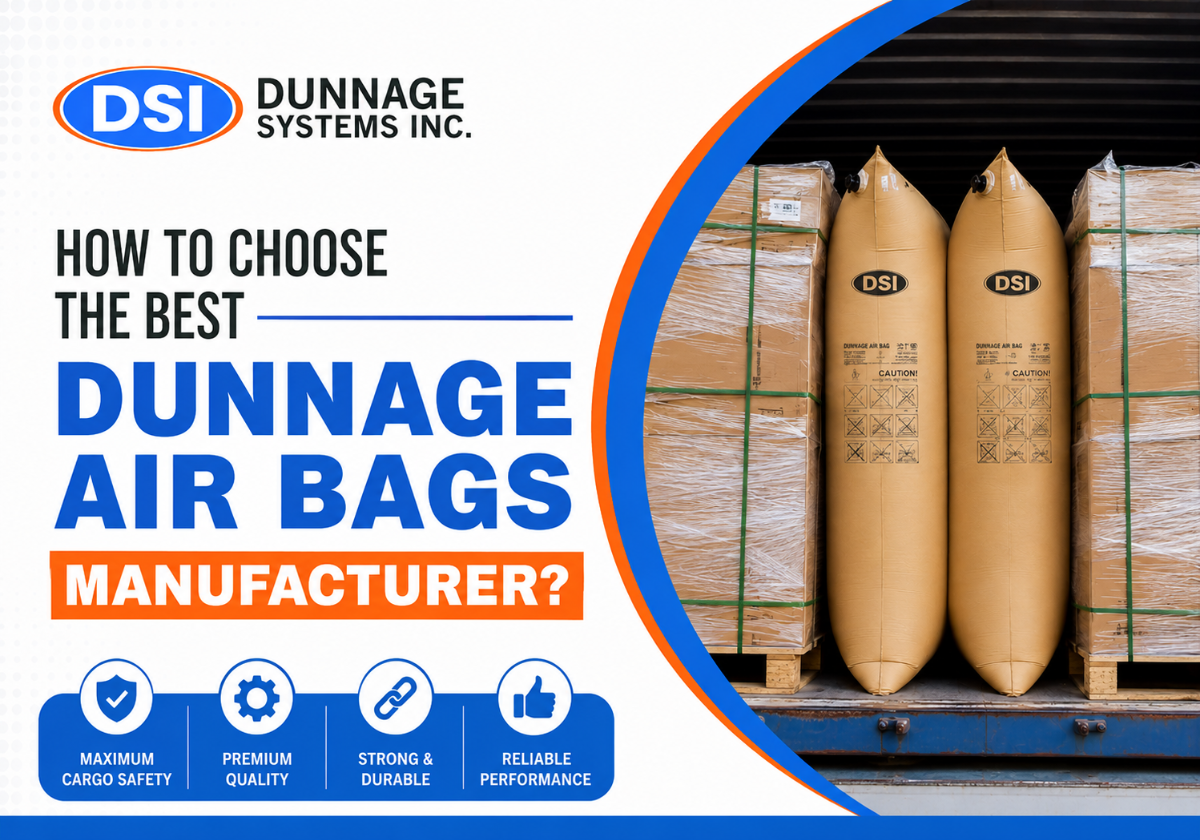
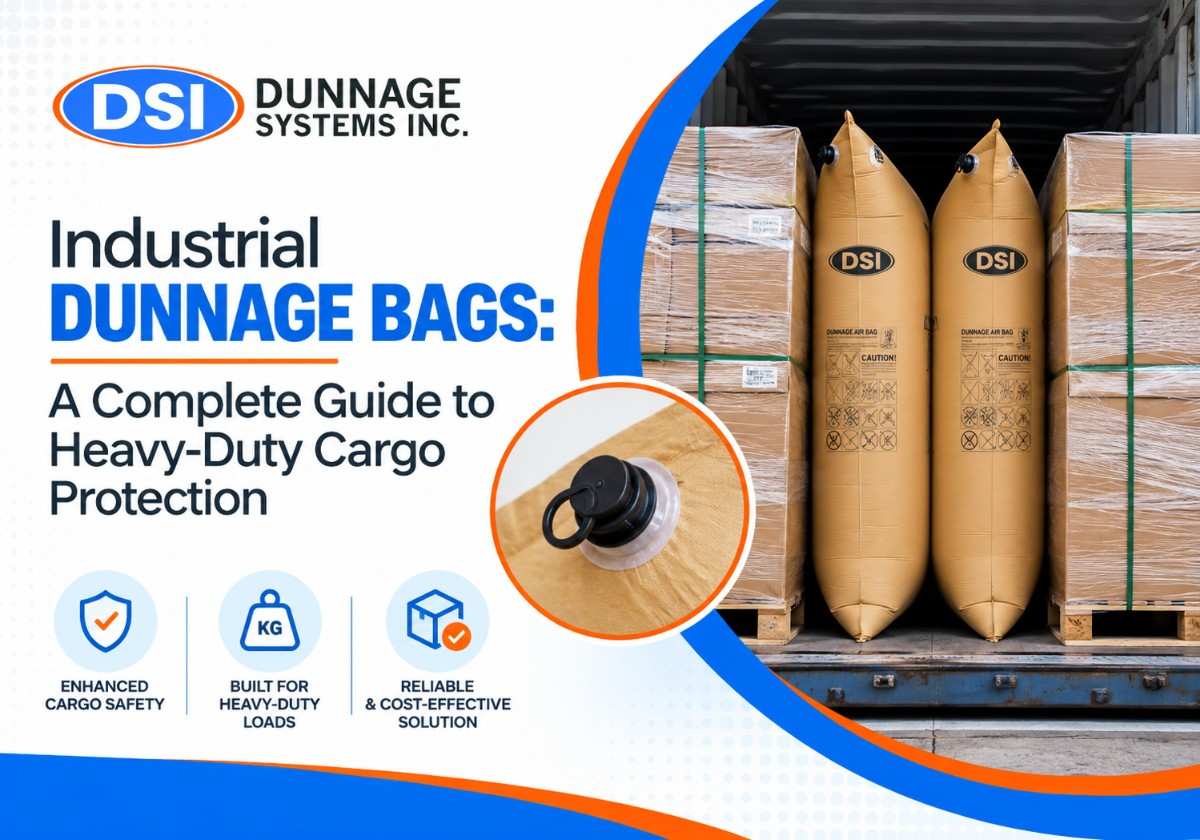
Industrial dunnage bags are heavy-duty inflatable load securement bags designed for freight applications where standard bag constructions are not sufficient. They are built from higher ply kraft paper or higher level polywoven materials to handle the greater lateral forces, heavier cargo weights, and more demanding transit conditions that industrial freight generates.
What separates an industrial dunnage bag from a standard option is not just the label. It is the construction specification. A standard truck bag rated for consumer goods at Level 1 or 2-ply kraft is not built for the coupling forces of a heavy railcar or the sustained pressure of a 200,000 lb metal coil shipment on a long haul. Industrial bags are rated, tested, and certified for those conditions.
The operations that need them include:
- Automotive manufacturers and tier suppliers shipping heavy components by rail and intermodal
- Steel mills and metal fabricators moving coils, sheets, and structural products
- Paper and pulp operations shipping bulk rolls and bales by railcar
- Chemical and pharmaceutical companies moving heavy drums and intermediate bulk containers
- Agricultural operations shipping bulk commodities and heavy packaged goods
- Construction material suppliers moving brick, tile, flooring, and heavy building products
If your freight is heavy, high-value, or moves by rail, industrial dunnage bags are the right product category to be working from.
Types of Industrial Dunnage Bags
Industrial dunnage bags are available in two core material types and a combined system option for the most demanding applications. The right material depends on the freight mode, load weight, and whether the bags will be reused.
Kraft Paper Industrial Dunnage Bags
Kraft paper dunnage bags at the industrial end of the range are the 6-ply and 8-ply constructions. These heavier ply options use multiple layers of high-strength extensible kraft paper with a polyethylene inner bladder to deliver performance well above what standard 2-ply or 4-ply bags provide.
They are the right choice for high-volume industrial truck operations where the cargo is heavier than standard consumer freight and cost per shipment is still a primary consideration. At 6-ply and 8-ply, they handle heavier loads and larger voids while remaining single-use and fully recyclable after each shipment.
For very heavy industrial loads on rail applications, kraft paper has practical limits. The coupling and braking forces in rail transit can exceed what paper construction reliably handles, which is why heavy rail applications typically require polywoven bags.
Polywoven Industrial Dunnage Bags
Polywoven dunnage bags at Level 3 through Level 5 are the industrial standard for heavy rail, intermodal, and ocean freight. Built from elastic woven polypropylene fabric with an inner air bladder, they deliver the structural performance that heavy industrial loads demand across the most demanding freight conditions in the industry.
Level 3 covers most standard heavy-duty railcar applications with moderate to heavy industrial cargo. Level 4 handles very heavy industrial loads like dense machinery components and steel fabrications. Level 5 is the maximum-duty rating and is built specifically for the heaviest rail applications including metal coils, paper rolls, and brick exceeding 200,000 lbs where no lower level is sufficient.
Polywoven industrial bags are reusable, moisture-resistant by construction, and carry AAR certification across all level ratings. For operations running consistent heavy rail lanes, the reuse economics of polywoven bags at Level 3 and above are significantly better than single-use alternatives over time.
Combined Void Filler and Industrial Dunnage Bag Systems
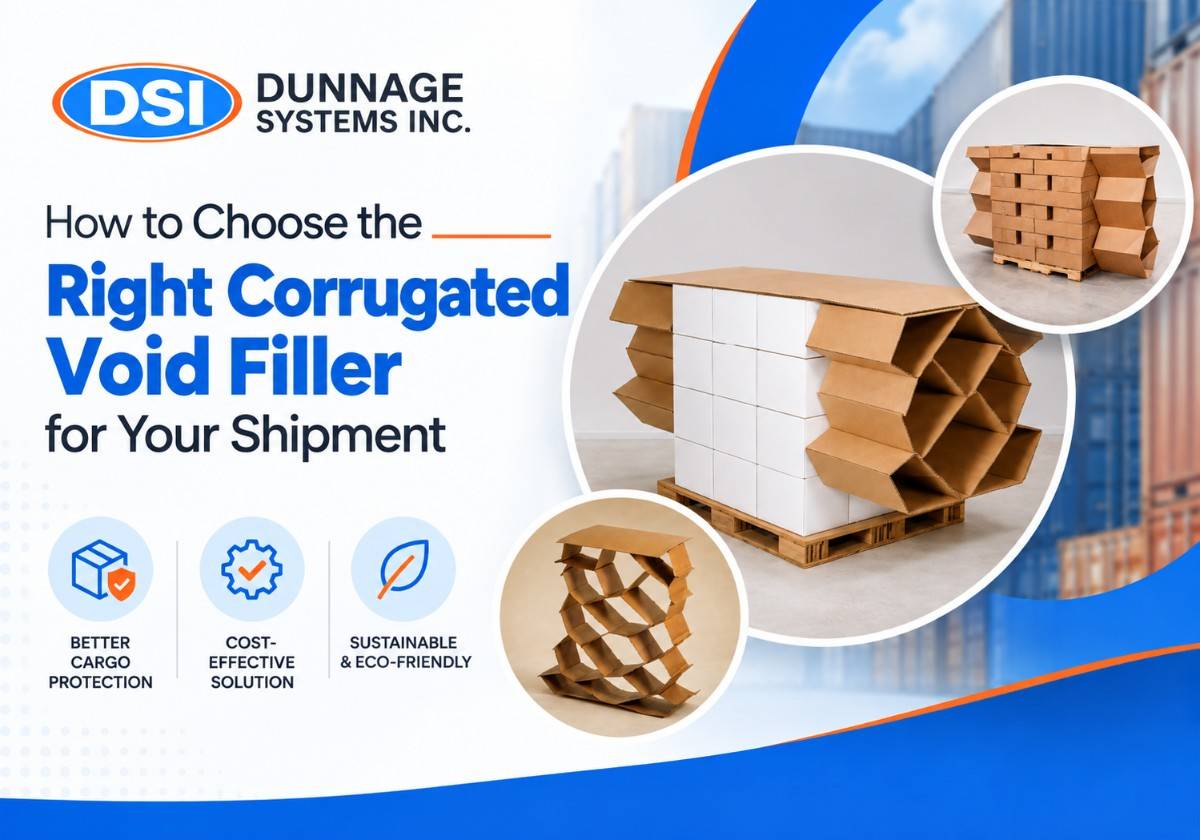
For the most demanding industrial applications, where the void is large, the cargo is extremely heavy, or the load surface is rough and could damage a bag directly, combined systems integrate a structural corrugated or honeycomb panel with a polywoven industrial dunnage bag in a single unit.
The panel protects the bag surface from sharp cargo edges and distributes inflation pressure evenly across the load face. The inflated bag fills the remaining void and holds everything in position. For metal coil shipments, heavy paper roll loads, and bulk chemical containers where direct bag-to-cargo contact is a failure risk, combined systems are the right call.
Industries That Rely on Industrial Dunnage Bags
Industrial dunnage bags are used across every sector that moves heavy, high-value, or structurally demanding freight. Here is how the most common industrial freight categories use them.
Automotive and Heavy Manufacturing
Automotive supply chains operate on just-in-time delivery schedules where a damaged shipment means a production line stoppage. Engine blocks, transmission assemblies, body panels, and stamped components are dense, heavy, and move by rail and intermodal across long distances. Level 3 and Level 4 polywoven bags are the standard for automotive rail shipments, providing the certified performance that AAR compliance requires and the load-holding strength that high-value automotive parts demand.
Steel, Metal, and Paper Mill Freight
Steel coils, sheet metal, structural steel, and bulk paper rolls are among the heaviest freight categories moving by rail in the United States. The sheer weight of these loads combined with the coupling forces of long freight trains makes Level 5 polywoven bags the only appropriate choice for many of these applications. Combined void filler and bag systems are also common in metal coil applications where the bag needs protection from sharp coil edges to perform reliably across the full transit.
Chemical and Pharmaceutical Shipping
Chemical freight presents a dual challenge. The loads are often heavy, with drums, intermediate bulk containers, and bulk totes exceeding standard pallet weights. And the consequences of a shifted or tipped load are more serious than product damage alone. Industrial polywoven bags at appropriate level ratings provide the bracing strength needed for heavy chemical shipments while the reusable construction reduces waste from repeated single-use bag disposal on consistent lanes.
Agriculture and Bulk Commodity Transport
Agricultural operations shipping bulk grain, fertilizer, seed, and packaged food products in large quantities by rail and intermodal benefit from industrial dunnage bags at Level 3 and above for rail legs and 6-ply to 8-ply kraft paper for high-volume truck operations. The combination of heavy load weights and long transit distances makes proper void securement a meaningful factor in reducing damage claims and maintaining cargo quality at delivery.
Construction Materials and Building Products
Brick, tile, flooring, roofing materials, and heavy building products are dense loads that ship in large volumes. Load shifting in these shipments leads to breakage rates that compound quickly across a full pallet or railcar load. Industrial dunnage bags at the right level for the freight mode keep these loads stable from the point of loading to delivery, reducing breakage rates and the rework costs that come with damaged building material shipments.
How to Select the Right Industrial Dunnage Bag for Your Load
Industrial bag selection follows the same four-step framework as standard bag selection, but the stakes at each step are higher. Getting any one of these wrong on a heavy industrial load is a more expensive mistake than on a standard freight application.
Match the Level to the Load Force
Start with the freight mode. Rail requires AAR-certified bags at Level 3 or above for most heavy industrial applications. The coupling forces in rail transit are the most demanding in any freight mode and cannot be safely handled by lower-level bags regardless of how heavy-duty the bag marketing claims to be. Ocean and intermodal applications require Level 2 at minimum, with heavier cargo pushing to Level 3 and above. Heavy truck freight with industrial cargo typically calls for Level 2 polywoven or 6-ply to 8-ply kraft paper depending on load weight and reuse requirements.
Measure the Void Before Selecting a Size
In industrial freight, void dimensions are often larger and less uniform than standard pallet configurations. Measure void width at the widest point, load height, and gap length before selecting a bag size. For voids wider than 24 inches, a combined void filler and bag system is the more effective solution than a single oversized bag. For non-standard void dimensions that fall outside catalog sizes, custom sizing is available and is worth the investment when the alternative is a poorly fitting bag on a high-value industrial load.
Confirm AAR Certification for Rail Applications
For any industrial freight moving by rail, AAR certification is a non-negotiable requirement. The Association of American Railroads mandates certified load securement products for railcar applications. Using non-certified bags in a heavy industrial rail shipment is a compliance risk that can void damage claims and expose your operation to carrier liability disputes. Always confirm certification documentation before placing any bulk order for rail applications.
Choose the Right Material for Your Freight Mode
Kraft paper for high-volume single-use truck operations where load weight falls within the upper kraft paper range and bags will not be recovered. Polywoven for rail, ocean, intermodal, and any application requiring reuse, moisture resistance, or loads exceeding what kraft construction can handle. When in doubt between the two, polywoven is the more conservative choice for industrial freight because its performance envelope is significantly wider.
Why Industrial Dunnage Bags Outperform Wood Bracing and Foam
Wood bracing has been the traditional solution for heavy industrial freight for decades. It works, but the operational cost is significant. Cutting, nailing, and fitting wood bracing is labor-intensive, adds weight to every load, creates disposal costs at the destination, and cannot be reused. Foam blocking is lighter but generates landfill waste on every shipment and cannot be adjusted to fit irregular voids without significant cutting and shaping.
Industrial dunnage bags change all of that. A trained dock worker can place and inflate a polywoven bag in under two minutes without tools, carpentry, or cleanup. The bag conforms to the void shape automatically as it inflates, which means no measuring, no cutting, and no guesswork about whether the bracing fits correctly. Reusable polywoven bags at Level 3 through Level 5 eliminate disposal costs on repeat lanes and significantly reduce per-shipment load securement cost compared to wood over the course of a year.
For operations that have environmental or sustainability commitments, the shift from single-use wood or foam to reusable polywoven bags is a credible, documentable improvement that requires no major change to dock infrastructure or loading procedures.
Get Heavy-Duty Industrial Dunnage Bags from Dunnage Systems Inc.
Dunnage Systems Inc. has been supplying industrial and standard dunnage bags to freight operations across the United States since 1992. As the best dunnage air bags manufacturer for heavy industrial applications, they supply both kraft paper and polywoven options across the full construction range, with AAR certification documentation included for every rail-eligible product.
Their team provides free specification support before every order, confirming the right material, level, and size for your specific industrial freight application. Whether you are running heavy rail shipments of automotive components, bulk paper rolls, or steel fabrications, dunnage air bags from Dunnage Systems Inc. are matched to your load before a single bag ships.
Here is what you get when you order from Dunnage Systems Inc.:
- Kraft paper industrial dunnage bags in 6-ply and 8-ply constructions for heavy truck applications
- Polywoven industrial dunnage bags rated Level 3 through Level 5 for heavy rail, intermodal, and ocean freight
- Combined void filler and industrial dunnage bag systems for extra-large voids and maximum-duty loads
- AAR certified products with full compliance documentation for all rail applications
- Custom sizing for non-standard void dimensions across both material types
- Free pre-sale specification support to confirm the right bag for your industrial load
- Direct supplier pricing with no distributor markup at any volume level
- Same-day quote response
- Delivery across all 50 states in pallet and truckload quantities
Call (870) 942-4830 or visit dunnagesystems.com to get a same-day quote and talk through your industrial dunnage bag requirements with their team.
Frequently Asked Questions
What makes a dunnage bag industrial grade?
Industrial dunnage bags are built to higher construction specifications than standard bags. For kraft paper bags, industrial grade means 6-ply or 8-ply construction rather than the lighter 2-ply or 4-ply options used for standard consumer freight. For polywoven bags, industrial grade means Level 3 through Level 5 ratings, which are certified to withstand the higher load forces generated by heavy industrial cargo in rail, intermodal, and ocean freight applications.
What level polywoven bag do I need for heavy rail shipments?
Most standard heavy-duty railcar applications require Level 3 as a minimum. Very heavy industrial cargo including metal coils, paper rolls, steel fabrications, and brick typically requires Level 4 or Level 5. The specific level depends on the cargo weight, the void dimensions, and the forces the freight generates during transit. Dunnage Systems Inc. provides free specification support to confirm the right level for your specific rail application before any order is placed.
Can industrial dunnage bags replace wood bracing in railcar shipments?
Yes, in most heavy industrial rail applications. AAR-certified polywoven dunnage bags at the appropriate level rating provide equivalent or superior load securement performance compared to wood bracing, at significantly lower labor cost and with no disposal burden at the destination. For applications where very large voids need to be addressed, combined void filler and industrial dunnage bag systems can replace wood bracing entirely.
Are industrial dunnage bags reusable?
Polywoven industrial dunnage bags are designed for multiple reuse cycles. With proper inflation, careful handling during loading and unloading, and flat storage between shipments, Level 3 through Level 5 bags deliver consistent performance across many shipment cycles before replacement is needed. Kraft paper industrial bags are single-use and recyclable after each shipment.
Do industrial dunnage bags work for ocean container freight?
Yes. Polywoven industrial dunnage bags are well-suited to ocean container freight because their moisture-resistant polypropylene construction handles the humidity, condensation, and temperature swings that sealed containers experience on long transoceanic routes. For heavy industrial cargo in ocean containers, Level 3 and above polywoven bags are the appropriate choice. Kraft paper industrial bags are not recommended for ocean applications due to moisture vulnerability.