
If you have ever opened a trailer at the receiving dock and found crushed boxes, toppled pallets, or damaged goods, you already know how costly a single bad shipment can be. The product gets written off. The customer files a claim. The carrier pushes back. And somewhere in the middle of all that, your operations team is stuck doing paperwork instead of moving freight.
Air dunnage bags are one of the simplest and most effective tools in freight protection, yet a surprising number of shippers still rely on wood bracing, foam blocks, or nothing at all. If you are looking for a smarter way to protect cargo in trucks, railcars, or shipping containers, this post breaks down exactly why dunnage airbags deserve a place in every loading dock operation.
What Are Air Dunnage Bags?
Before getting into the benefits, a quick explanation for anyone new to the term.
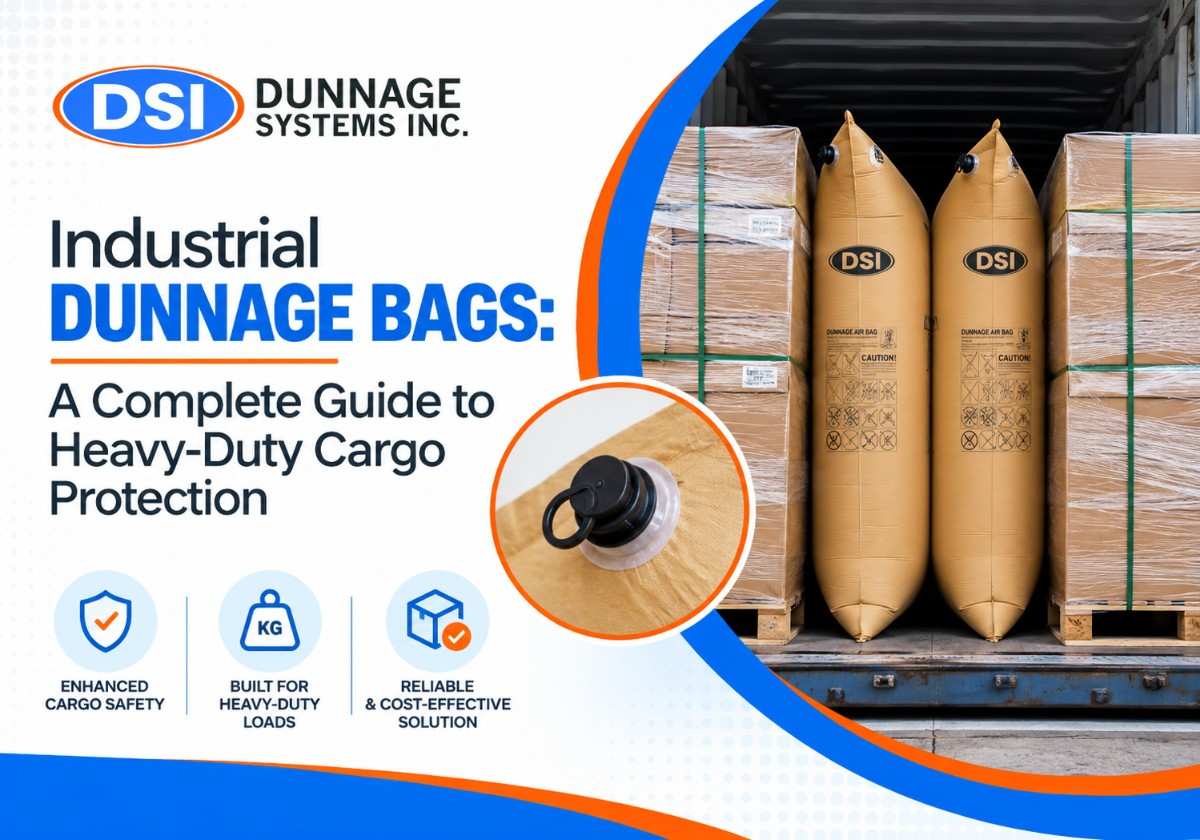
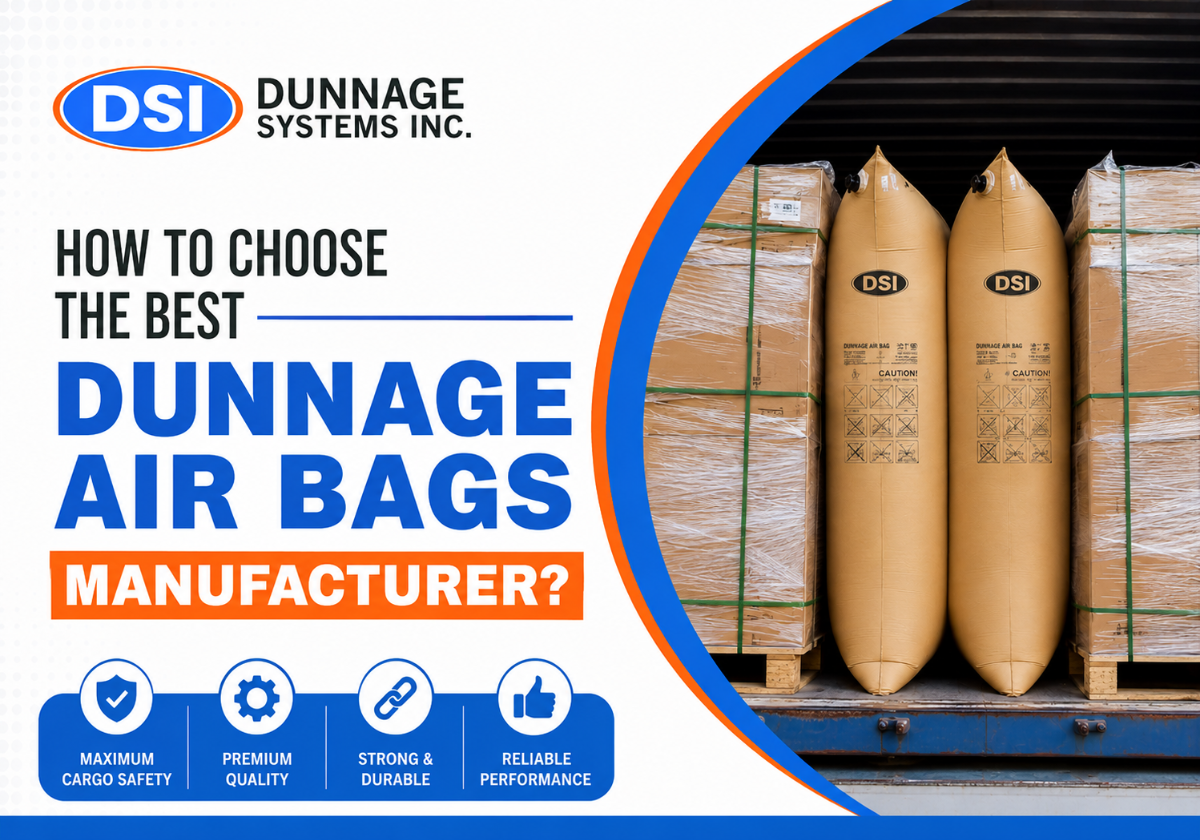
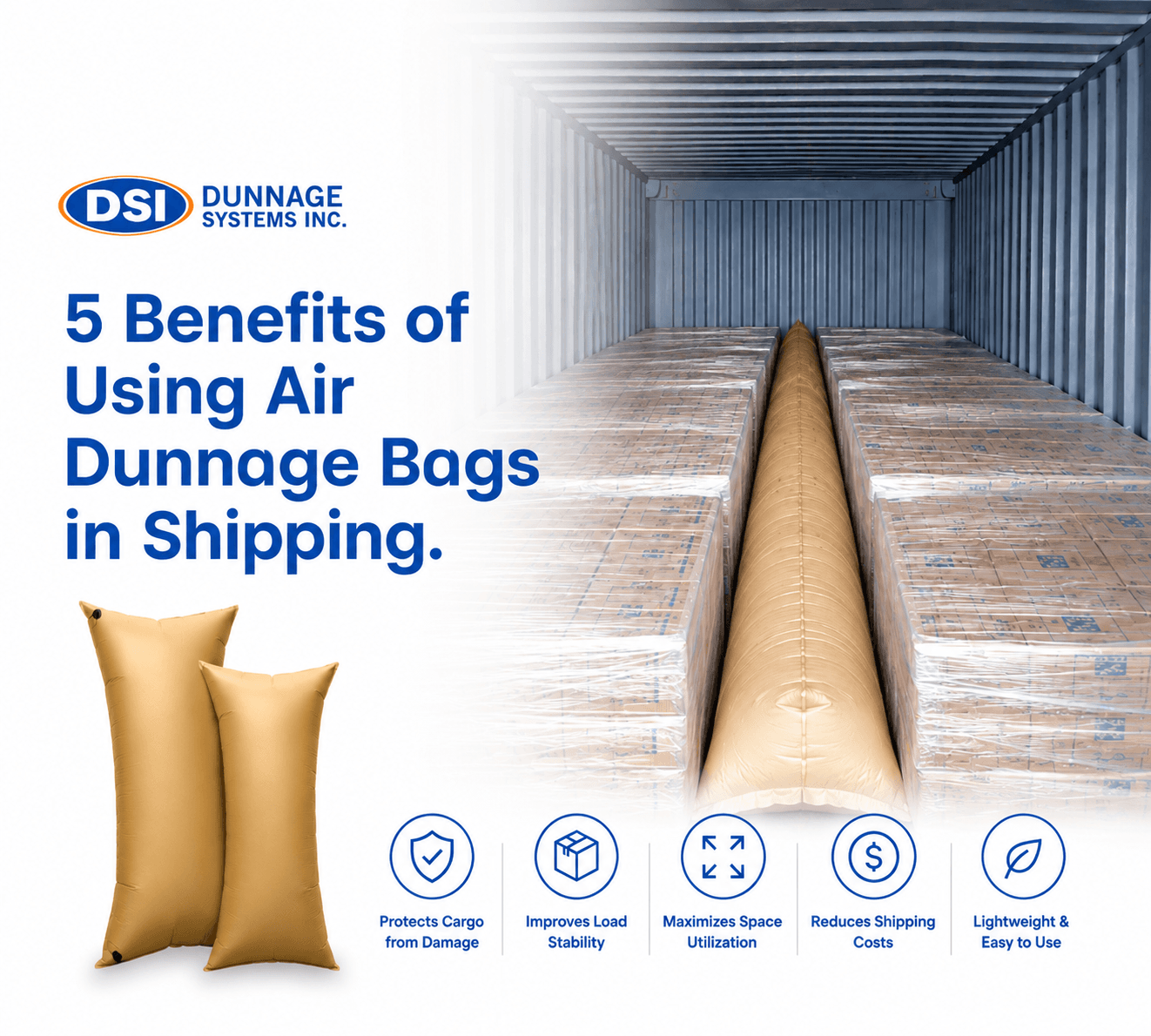
Air dunnage bags (also called dunnage airbags or inflatable dunnage bags) are pneumatic cushions placed in the empty voids between cargo inside a freight vehicle. Once inflated, they fill that empty space and prevent pallets, boxes, or crates from shifting during transit. They come in different materials, kraft paper and polywoven being the two most common, and different sizes to fit a wide range of void dimensions.
They inflate in under two minutes using a dunnage airbag inflator, a simple handheld tool that delivers the right amount of air pressure quickly and safely. No carpentry, no heavy equipment, and no messy cleanup. And when the shipment arrives, they deflate and either get recycled or reused depending on the type.
That is the basics. Now here is why they matter.
5 Key Benefits of Air Dunnage Bags in Shipping
Switching to dunnage airbags is one of those decisions that looks small on paper but delivers results across your entire freight operation. From cutting damage claims to speeding up dock throughput, the impact shows up fast. Here are the five benefits that matter most.
1. They Stop Cargo From Shifting, Which Stops Damage Before It Starts
This is the big one.
Cargo does not get damaged because trucks drive fast or roads are rough. It gets damaged because there is empty space inside the trailer that allows freight to move. One hard brake, one tight corner, and suddenly a pallet has shifted three inches into the load next to it.
Air dunnage bags fill those voids completely. When there is no space to move, the freight does not move. It is that straightforward. Operations that switch to properly rated dunnage airbags consistently see measurable reductions in freight damage claims, often within the first quarter of use.
For high-value shipments, automotive parts, electronics, pharmaceuticals, or food and beverage products, that kind of protection is not optional. It is essential.
2. Your Loading Team Will Thank You
Ask any dock worker who has spent time cutting and nailing wood bracing how much they enjoy that process. The answer is usually not printable.
Air dunnage bags take that problem off the table entirely. A trained dock worker can place and inflate a dunnage airbag in under two minutes per void. There is no cutting, no hammering, no measuring, and no cleanup at the destination. Just place it, inflate it with a dunnage bag inflator tool, and move on to the next load.
That speed adds up across a full shift. Faster loading means more trucks out the door per day, less overtime, and a dock crew that is not exhausted by the end of the shift. The operational efficiency gain alone is enough reason for many freight managers to make the switch.
3. They Cost Less Than the Damage They Prevent
The most common pushback on dunnage airbags is cost. And it is a fair question to ask.
But here is the honest math. A pallet of kraft paper air dunnage bags costs a fraction of what a single freight damage claim costs. And that is before you factor in the replacement product, the return shipping, the customer service time, and the hit to your carrier scorecard.
Polywoven dunnage airbags take the savings even further. Because they are reusable across multiple shipment cycles, the per-use cost drops significantly over time. For high-volume operations, buying direct from a dunnage airbags supplier like Dunnage Systems Inc. removes distributor markups entirely, bringing the cost per shipment down even more.
The ROI math on dunnage airbags is not complicated. One prevented damage claim typically covers weeks of supply costs.
4. AAR Certified for Rail Compliance
If any part of your supply chain moves freight by rail, this one is non-negotiable.
The Association of American Railroads (AAR) has specific certification requirements for load securement products used in rail applications. Using non-certified products is not just a compliance risk, it can void damage claims entirely if a carrier disputes liability.
Dunnage Systems Inc. supplies AAR-certified dunnage airbags in both kraft paper and polywoven constructions, with full compliance documentation available for procurement and logistics teams. Whether you are running intermodal lanes or dedicated rail corridors, the certification piece is already handled.
5. A Genuinely Sustainable Alternative to Wood and Foam
Sustainability in freight packaging has moved from a nice-to-have to a real procurement consideration for many businesses. And if you are still using wood bracing or foam blocking, the waste conversation is worth having.
Kraft paper dunnage bags are fully recyclable. Polywoven bags are reusable. Both options eliminate the landfill burden that comes with foam blocking and single-use plastic alternatives. For companies with ESG commitments or customers who ask about packaging sustainability, this is a credible, documentable improvement.
It is not just good optics either. Less waste at the dock means less cleanup, lower disposal costs, and a simpler operation overall.
Kraft vs Polywoven: Which One Do You Actually Need?
Short answer: it depends on your freight mode and how often the bags will be reused.
Kraft paper dunnage airbags are the right choice for single-use, high-volume operations where cost per shipment is the priority. They come in 2-ply through 8-ply constructions depending on void size and load weight.
Polywoven dunnage airbags are built for heavy-duty, reusable applications including rail, intermodal, and ocean container shipping. They are moisture-resistant, rated from Level 0 through Level 5, and hold up across multiple inflation cycles.
If you are not sure which specification fits your load, the team at Dunnage Systems Inc. will help you figure it out before you place an order.
The Bottom Line
Cargo damage is expensive. Wood bracing is slow. Foam creates waste. And doing nothing is the most costly option of all.
Air dunnage bags solve a real operational problem without adding complexity, cost, or labor to the loading process. For freight managers who want fewer damage claims, faster dock throughput, and a more sustainable operation, dunnage airbags are one of the easiest wins available.
Dunnage Systems Inc. supplies kraft paper and polywoven dunnage airbags across the USA in pallet and truckload quantities, with same-day quote response and technical support included. Call (870) 942-4830 or visit dunnagesystems.com to get started.
Frequently Asked Questions
What is the difference between air dunnage bags and dunnage airbags?
They are the same product. Air dunnage bags and dunnage airbags are two names for the same inflatable void-fill cushions used to prevent cargo shifting inside trucks, railcars, and shipping containers.
How do I know which size air dunnage bag I need?
The right size depends on the void dimension between your cargo and the trailer wall or adjacent load. Dunnage Systems Inc. offers free specification support to help you match the right bag size and construction level to your load profile.
Are dunnage airbags reusable?
Polywoven dunnage airbags are designed for multiple uses and can be reinflated across several shipment cycles. Kraft paper dunnage bags are typically single-use and recyclable after the first shipment.
Do air dunnage bags work for rail shipments?
Yes, provided they carry AAR certification. Dunnage Systems Inc. supplies AAR-certified dunnage airbags for rail applications with full compliance documentation.
Where can I buy air dunnage bags in bulk?
Dunnage Systems Inc. supplies air dunnage bags in pallet and truckload quantities across all 50 states. Volume pricing is available and confirmed at the time of quote. Visit dunnagesystems.com or call (870) 942-4830 for a same-day response.