
If you have ever stared at a product catalog trying to figure out whether to order kraft paper or polywoven dunnage air bags, you are not alone. It is one of the most common questions freight managers run into when setting up a new operation or switching suppliers, and it is one that actually matters. Pick the wrong material for your freight mode and you are either overspending on a bag that does more than you need, or under-protecting a load that deserved better.
The good news is the decision is not complicated once you know what each bag is built for. Here is everything you need to make the right call.
What Is the Difference Between Kraft Paper and Polywoven Dunnage Air Bags?
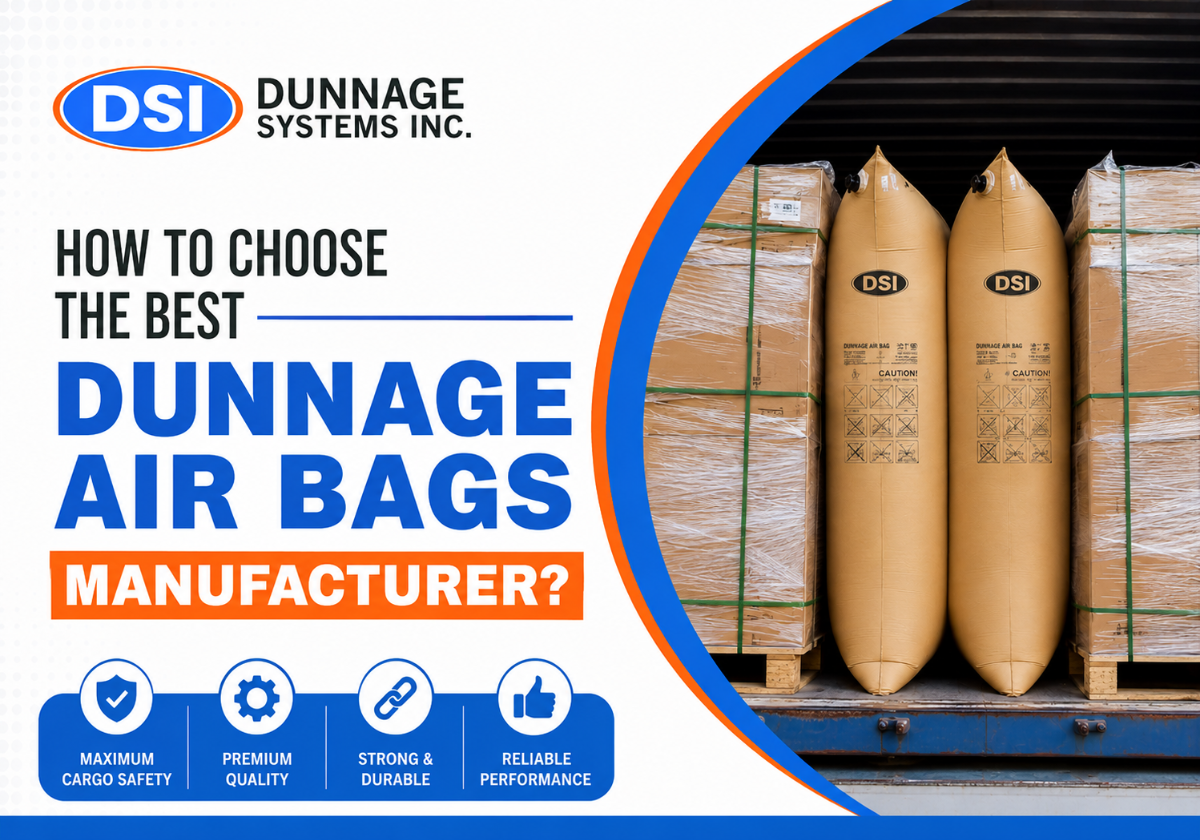
Both are dunnage air bags, meaning both are inflatable cushions designed to fill voids between cargo inside trucks, railcars, and shipping containers and stop freight from shifting during transit. That is where the similarities end.
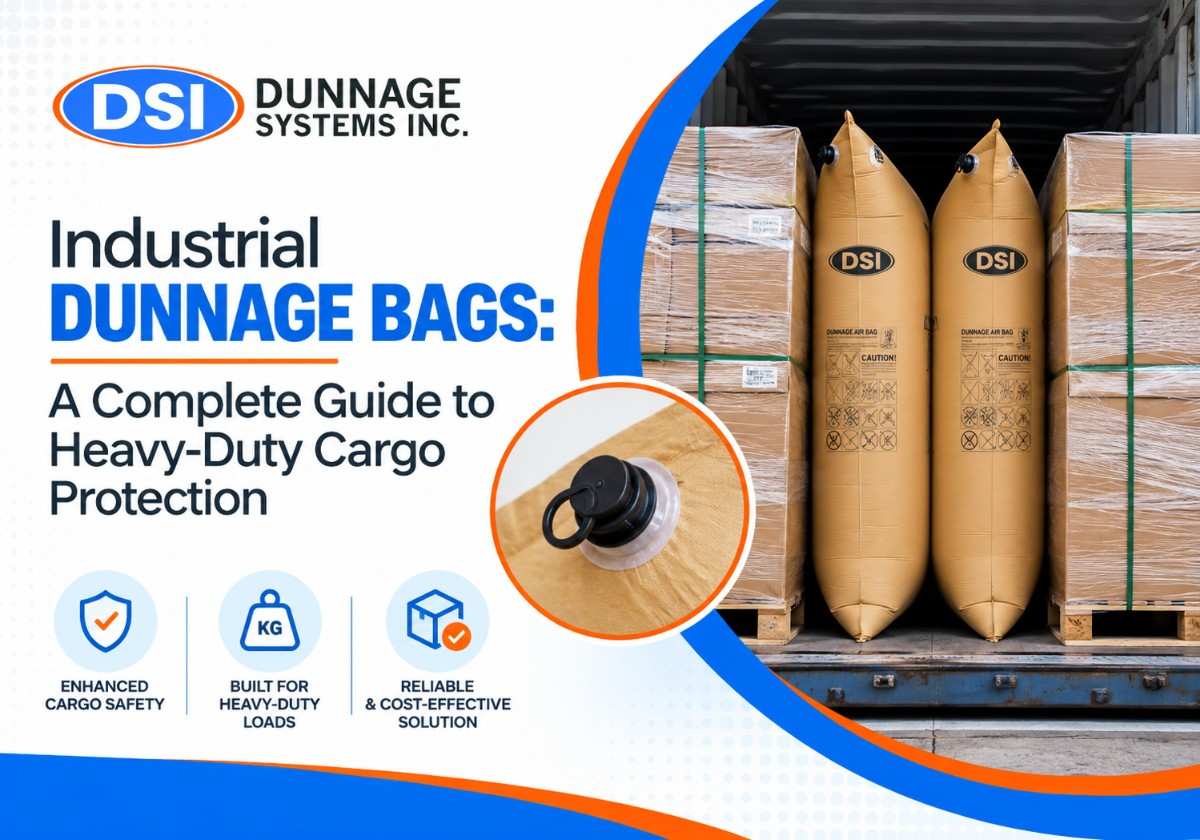
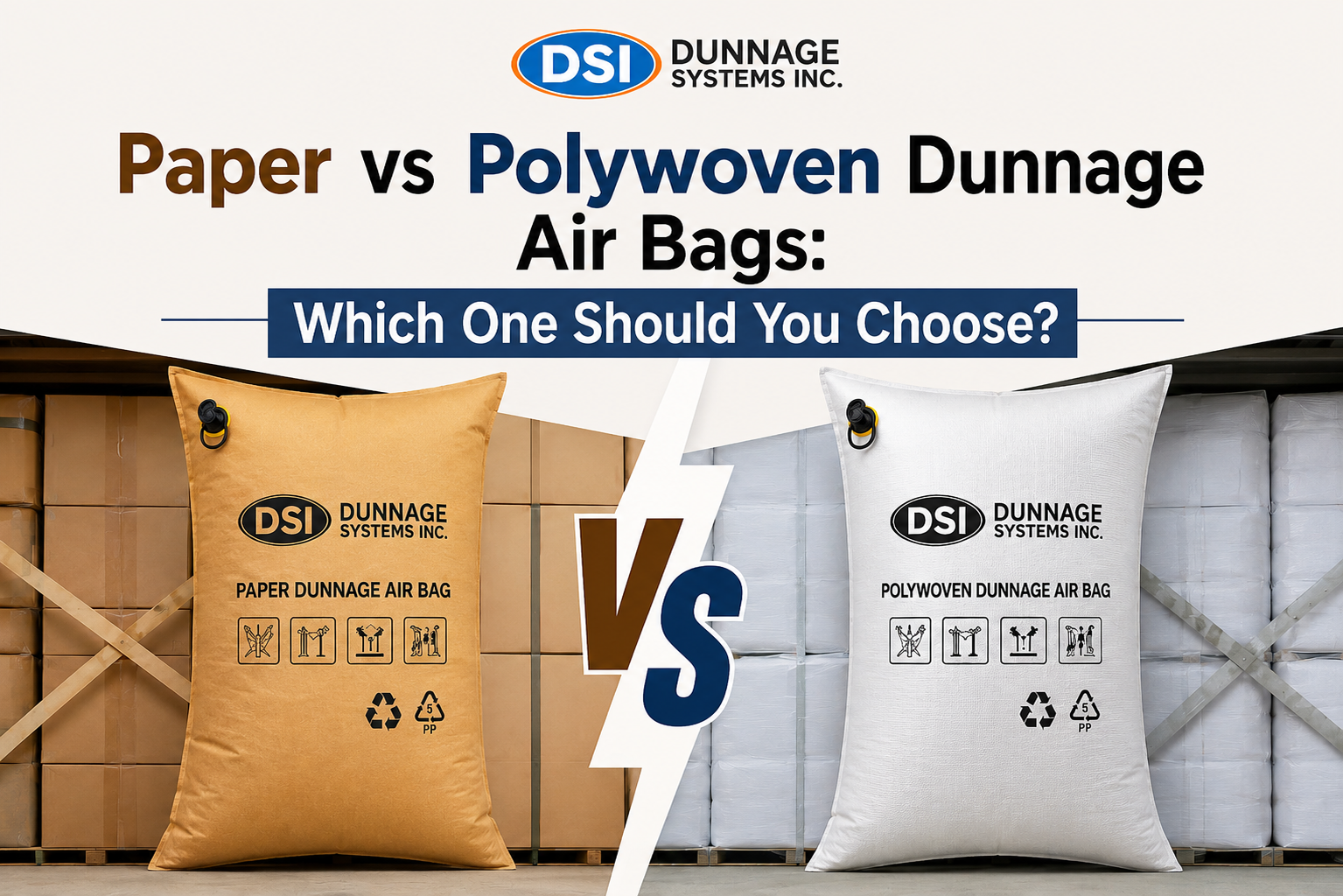
Kraft paper dunnage bags are made from multiple layers of high-strength extensible kraft paper with a polyethylene inner bladder. They are lightweight, cost-effective, and designed for single-use applications where volume and price per unit are the priority.
Polywoven dunnage bags are built from elastic woven polypropylene fabric with an inner air bladder. They are tougher, naturally moisture-resistant, and built to be reinflated and reused across multiple shipment cycles.
Same job. Different construction. Different use case. The rest of this guide helps you figure out which one fits yours.
A Closer Look at Each Type
Understanding what goes into each bag makes the comparison a lot clearer.
Kraft Paper Dunnage Bags
Kraft paper dunnage bags are constructed from layers of high-strength extensible kraft paper wrapped around a polyethylene inner bladder that holds the air. The number of paper layers, referred to as ply count, determines how much weight and pressure the bag can handle.
Dunnage Systems Inc. supplies kraft paper dunnage bags in the following constructions:
- 2-ply: For lighter loads and smaller voids
- 4-ply: Mid-range applications with moderate load weight
- 6-ply: Heavier loads with a wider void gap
- 8-ply: The heaviest-duty kraft option for demanding truck and intermodal applications
An optional polyethylene outer coating is available on higher-ply constructions for environments where some moisture exposure is expected. Kraft paper bags are approved for truck, ocean, rail, and intermodal use and are fully recyclable after the shipment is complete.
They are the right choice for operations running high volumes with a cost-per-shipment focus, where the bag will be used once and recycled.
Polywoven Dunnage Bags
Polywoven dunnage bags are built from elastic woven polypropylene fabric, which gives them a fundamentally different performance profile. The elastic construction means the bag conforms naturally to the void shape and maintains consistent pressure against the load throughout transit.
Dunnage Systems Inc. supplies polywoven dunnage bags rated from Level 0 through Level 5 based on the lateral load force they are certified to withstand, with Level 5 being the heaviest-duty option available. Key features include:
- No polyethylene outer coating required due to inherent moisture resistance
- Quick-deflate removable valve for fast reuse between shipments
- AAR certified across all levels for full rail compliance
- Suitable for rail, intermodal, ocean, and over-the-road truck applications
Because polywoven bags are designed to be reinflated and reused, the per-use cost comes down significantly over time on consistent, repeat lanes. For heavy-duty, high-frequency operations, they are the more economical choice in the long run despite the higher upfront cost.
How to Choose: 4 Factors That Make the Decision Easy
Most buyers overthink this. Work through these four factors in order and the right bag becomes obvious.
1. Freight Mode
This is the most important factor and the one that narrows the field fastest.
For standard over-the-road truck shipments, both kraft paper and polywoven bags work well. The choice comes down to the other three factors below.
For rail applications, AAR certification is mandatory. Both kraft paper and polywoven dunnage bags from Dunnage Systems Inc. meet AAR standards, but polywoven bags are generally the preferred choice for rail due to their higher durability and ability to handle the coupling and braking forces that rail shipments generate.
For intermodal and ocean container freight, polywoven is the stronger call. Transit times are longer, humidity and moisture exposure are higher, and the bag needs to hold up across a more demanding journey.
2. Load Weight and Cargo Type
Heavier loads need more bag. That means higher ply kraft or higher level polywoven.
For lighter cargo like packaged consumer goods, food and beverage, or general freight, 2-ply to 4-ply kraft paper or Level 1 polywoven is typically sufficient. For heavier industrial cargo like automotive parts, steel components, or machinery, step up to 6-ply or 8-ply kraft or Level 3 and above polywoven.
When in doubt, go one level up. The cost difference between levels is small. The cost of a shifted load is not.
3. Single Use vs Reusable
This comes down to how your operation is set up.
If you are shipping high volumes to varied destinations and the bag will not come back, kraft paper is the right call. It does the job, recycles cleanly, and keeps cost per shipment low.
If you are running consistent, repeat lanes and your dock team can collect, deflate, and store bags between shipments, polywoven bags will save you money over time. A bag that gets reused across 15 to 20 shipments has a dramatically lower per-use cost than replacing single-use kraft bags on every load.
4. Budget and Volume
For operations where cost per shipment is the primary driver, kraft paper dunnage bags are the economical starting point. Buying direct from a manufacturer removes distributor markup and brings the per-unit cost down further on pallet and truckload orders.
For operations where the long-term cost picture matters more than the upfront unit price, polywoven bags deliver better value over time on high-frequency lanes. Run the math on your route frequency before defaulting to the cheaper option per bag.
Side-by-Side Comparison
| Feature | Kraft Paper Dunnage Bags | Polywoven Dunnage Bags |
| Material | Multi-layer extensible kraft paper | Elastic woven polypropylene |
| Construction | 2-ply to 8-ply | Level 0 to Level 5 |
| Reusable | No, single-use | Yes, multiple cycles |
| Moisture Resistance | Optional PE coating | Inherent, no coating needed |
| AAR Certified | Yes | Yes |
| Best For | Truck, high-volume, cost-driven ops | Rail, intermodal, ocean, heavy cargo |
| Environmental | Fully recyclable | Reusable, reduces waste over time |
| Cost Profile | Lower upfront per unit | Higher upfront, lower per-use over time |
So Which One Should You Choose?
Here is the short version.
Choose kraft paper dunnage bags if you are running high-volume truck operations, your priority is cost per shipment, and the bags will not be reused. They do the job reliably, recycle cleanly, and keep your per-load costs low.
Choose polywoven dunnage bags if your freight moves by rail, intermodal, or ocean container, if you are dealing with heavy industrial loads, or if you run consistent repeat lanes where reusing bags makes financial sense. The higher upfront cost pays for itself faster than most buyers expect.
If you are still not sure, the team at Dunnage Systems Inc. will work through your load profile and freight mode with you before recommending anything.
Get the Right Dunnage Air Bags from Dunnage Systems Inc.
Dunnage Systems Inc. has been supplying kraft paper and polywoven dunnage air bags to freight operations across the United States since 1992. More than 30 years in the business means they have seen every load profile, every freight mode, and every operational setup imaginable.
Here is what you get when you order from them:
- Kraft paper dunnage bags in 2-ply through 8-ply constructions
- Polywoven dunnage bags rated Level 0 through Level 5
- AAR certified products across both material types
- Custom sizing for non-standard void dimensions
- Free specification support before every order
- Direct supplier pricing with no distributor markup
- Same-day quote response
- Shipping across all 50 states in pallet and truckload quantities
Call (870) 942-4830 or visit dunnagesystems.com to get started.
Frequently Asked Questions
What is the difference between kraft paper and polywoven dunnage air bags?
Kraft paper dunnage bags are made from layers of high-strength extensible kraft paper and are designed for single-use, high-volume truck operations. Polywoven dunnage bags are made from elastic woven polypropylene, are reusable across multiple shipments, and are built for heavier loads in rail, intermodal, and ocean container applications. Both types are AAR certified and available from Dunnage Systems Inc.
Are polywoven dunnage bags worth the extra cost?
For operations running consistent repeat lanes or shipping heavy cargo by rail or intermodal, yes. Polywoven bags are reusable, which brings the per-use cost down significantly over time. For high-volume single-use truck operations, kraft paper is the more cost-effective choice.
Can kraft paper dunnage bags be used for rail shipments?
Yes, provided they carry AAR certification. Kraft paper dunnage bags from Dunnage Systems Inc. are approved for truck, ocean, rail, and intermodal use. However, polywoven bags are generally preferred for rail applications due to their higher durability under the coupling and braking forces that rail transit generates.
How many times can polywoven dunnage bags be reused?
Polywoven dunnage bags are designed for multiple inflation cycles. The exact number depends on handling conditions and how bags are stored between shipments. With proper care, they can be reused across many shipments before replacement is needed.
Where can I buy kraft paper and polywoven dunnage air bags in bulk?
Dunnage Systems Inc. supplies both kraft paper and polywoven dunnage air bags in pallet and truckload quantities across all 50 states. Direct supplier pricing, free specification support, and same-day quote response are included. Visit dunnagesystems.com or call (870) 942-4830 to get started.