
If your operation runs consistent freight lanes, the math on single-use cargo protection adds up fast. Every shipment means a new bag, more waste at the dock, and another line item on the supply budget. Multiply that across hundreds or thousands of loads per year and the cost of doing nothing different becomes very clear.
Reusable dunnage air bags solve that problem. Built from elastic woven polypropylene and designed to be deflated, stored, and reinflated across multiple shipment cycles, they deliver the same cargo protection as single-use bags at a fraction of the per-shipment cost over time. For operations dealing with heavy loads, demanding freight modes, or sustainability targets, they are not just a better option. They are the right one.
This guide covers everything you need to know: how reusable dunnage air bags work, the benefits that matter most in a freight operation, which industries and applications they are best suited for, and how to get the most out of every bag you purchase.
What Are Reusable Dunnage Air Bags?
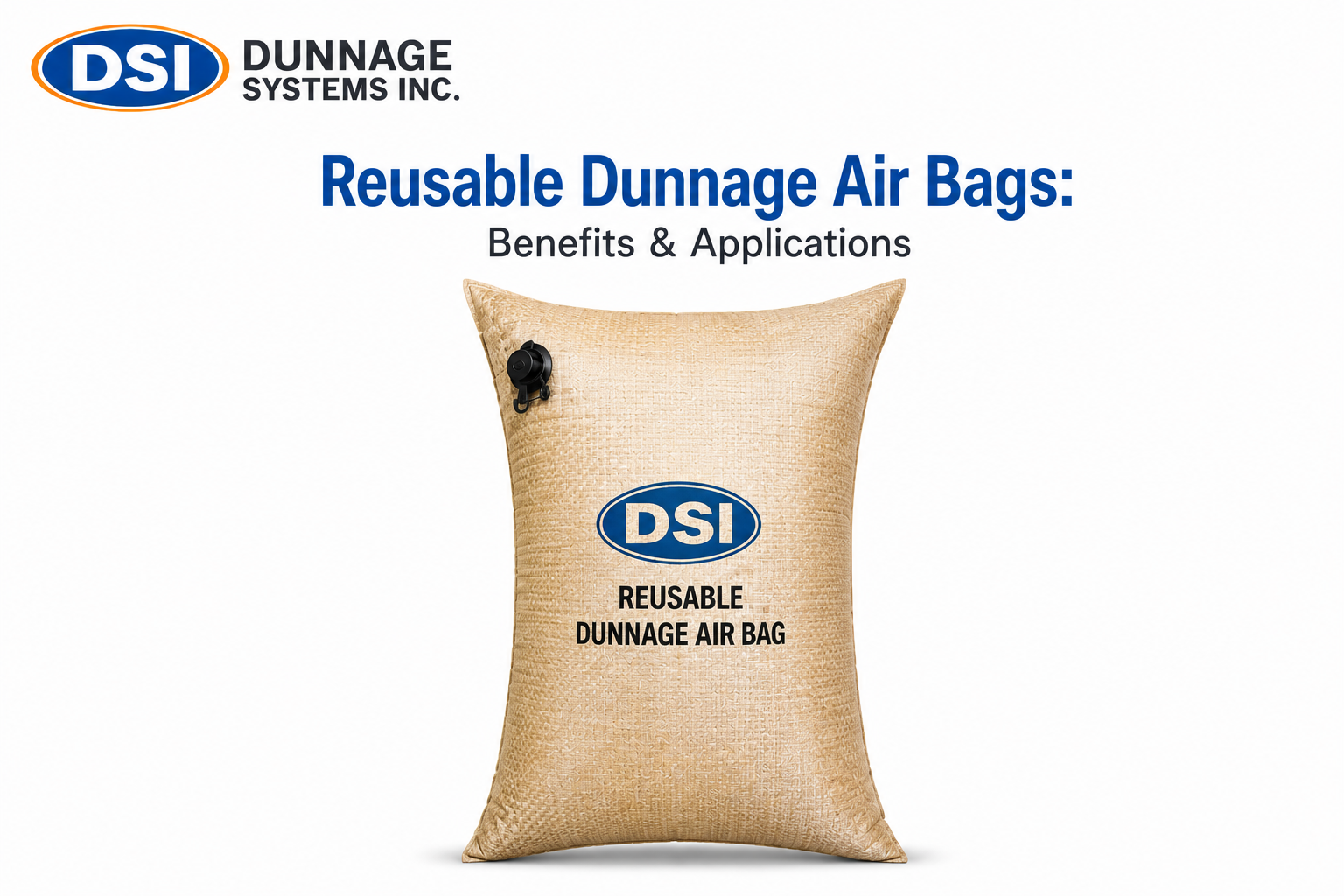
Reusable dunnage air bags are inflatable load securement bags made from elastic woven polypropylene fabric with a polyethylene inner bladder. Unlike kraft paper bags, which are designed for a single use before recycling, polywoven bags are built to be deflated after delivery, inspected, stored, and reinflated for the next shipment.
The construction is what makes reuse possible. The woven polypropylene outer shell resists tearing, puncturing, and moisture far better than kraft paper. The quick-deflate removable valve allows dock workers to release air pressure rapidly after unloading without damaging the bag, making it ready to fold, store, and return for the next load.
They are rated from Level 0 through Level 5 based on the lateral load force they are certified to withstand, with higher levels built for heavier, more demanding applications. They are AAR certified for rail use and suitable across truck, intermodal, and ocean container freight as well.
In short, dunnage air bags in a reusable polywoven format are designed to do the same job as a single-use bag, but across many shipments rather than just one.
Benefits of Reusable Dunnage Air Bags
The case for switching to reusable bags is not just about cost, although that alone is usually enough to make the decision easy. The benefits stretch across operations, compliance, sustainability, and load performance. Here is what actually changes when you make the switch.
1. Lower Cost Per Shipment Over Time
This is the number that gets most operations to pay attention. A polywoven dunnage bag costs more upfront than a single kraft paper bag. That is just true. But when that same polywoven bag gets used across 15, 20, or more shipment cycles, the per-use cost drops dramatically.
For a high-volume operation running consistent lanes, the annual saving from switching to reusable bags can be significant. Add in the reduced disposal and waste management costs that come with eliminating single-use bags from the operation, and the ROI becomes even more compelling.
The break-even point depends on how frequently the bags are reused and the volume of shipments, but for most consistent freight operations it comes within the first few months of switching.
2. Built to Handle Heavy and Demanding Loads
The elastic polypropylene construction of a reusable dunnage air bag is fundamentally stronger than kraft paper. It conforms to the void shape as it inflates, maintaining consistent contact pressure across irregular load surfaces. It does not tear under heavy lateral force the way a paper bag can when a dense, heavy load pushes against it in transit.
For heavy industrial freight, automotive parts, machinery components, metal coils, or bulk commodities, the polywoven construction handles the load forces that would compromise a lighter bag. The higher level ratings available in polywoven bags, up to Level 5, provide certified performance under the kind of force that heavy cargo generates during transit.
3. Moisture Resistant by Construction
Kraft paper dunnage bags are vulnerable to moisture. In a humid environment, a wet loading dock, or an ocean container with condensation, a paper bag can lose structural integrity before the shipment even reaches its first checkpoint.
Polywoven bags do not have that problem. The woven polypropylene outer shell is inherently moisture resistant without requiring an additional polyethylene coating. This makes them the reliable choice for ocean container freight, refrigerated shipping, or any application where the bag may be exposed to humidity, rain at the dock, or condensation inside the container during a long transit.
4. AAR Certified for Full Rail Compliance
Rail applications require more than a well-built bag. The Association of American Railroads mandates that load securement products used in railcar applications carry AAR certification. Without it, you are exposed to compliance risk, and damage claims can be voided by carriers if non-certified products are found in a disputed shipment.
Reusable polywoven dunnage bags from Dunnage Systems Inc. are AAR certified across all levels. The certification documentation is available with every order, which matters for procurement teams and operations managers who need to keep compliance records on file for carrier audits and damage claim processes.
5. Faster Dock Operations with Quick-Deflate Valve
The quick-deflate removable valve on polywoven bags is a detail that makes a real difference at the dock. After unloading, a dock worker can release the air pressure in seconds, fold the bag flat, and set it aside for the next shipment. There is no cutting, no tearing, and no need to force a single-use bag out of a tight void.
On high-volume unloading docks, that speed adds up across a shift. Faster bag removal means faster trailer turnaround, which means more loads processed per day without adding labor. For operations that are already stretched thin on dock time, this is a practical operational gain that shows up quickly.
6. Sustainable and Waste-Reducing
Sustainability in freight packaging has moved from a talking point to a procurement requirement for many businesses. If your operation generates significant waste from single-use cargo protection materials, switching to reusable polywoven bags is one of the most straightforward ways to reduce it.
Fewer bags purchased means less manufacturing material consumed. Reusable bags mean less landfill waste from every shipment. For companies with ESG commitments, supplier sustainability requirements, or customers who ask about packaging practices, this is a credible, documentable improvement that requires no major operational change to implement.
Where Are Reusable Dunnage Air Bags Used?
Reusable polywoven dunnage bags are used across virtually every freight mode and industry that moves heavy, high-value, or repeat cargo. Here are the applications where they consistently deliver the strongest results.
Over-the-Road Truck Freight
For truck operations running consistent lanes with the same trailer configurations, reusable bags are the natural fit. The bags go out with the load, come back with the empty trailer, get inspected and stored, and go out again. On dedicated routes where the same driver and trailer make the same run regularly, a well-managed reusable bag program can operate for months with the same set of bags.
Rail and Intermodal Shipping
Rail applications are one of the strongest use cases for reusable polywoven dunnage bags. The higher load forces involved in rail transit, from coupling impacts to braking forces on long freight trains, require a bag construction that can handle real stress without failing mid-journey. Polywoven bags at Level 3 and above are built for exactly this environment.
For intermodal operations that move freight across both truck and rail legs, a single polywoven bag that is rated for both modes simplifies procurement and eliminates the need to manage two separate product types across different parts of the journey.
Ocean Container Freight
Ocean containers present conditions that single-use kraft paper bags simply cannot handle reliably. Long transit times, humidity inside sealed containers, temperature swings between ports, and the constant motion of a vessel at sea all put sustained stress on cargo protection materials.
Reusable polywoven bags hold up in all of these conditions. Their moisture resistance keeps them performing through the full transit, and their durability means they can be returned and reused on the next outbound container rather than discarded at the destination port.
Automotive and Heavy Industry
Automotive supply chains move heavy, high-value components on tight delivery schedules. A damaged part means a line stoppage, which makes cargo protection a serious operational priority rather than an afterthought. Reusable polywoven bags at higher level ratings are the standard choice in automotive freight because they provide reliable, repeatable performance across the kind of dense, heavy loads that automotive parts represent.
The same logic applies to machinery, metal fabrications, and other heavy industrial freight where load weight and density demand a bag built to match.
Agriculture and Bulk Commodity Freight
Agricultural shipments and bulk commodities often move in large quantities on repeat lanes, making the economics of reusable bags particularly favorable. Grain, fertilizer, seed, and bulk food products typically ship in large bags or containers that need stable void fill support to prevent load movement and product damage during transit.
Polywoven dunnage bags hold up well in agricultural environments where paper products may be exposed to moisture, dust, or temperature variation in ways that compromise performance.
Reusable vs Single-Use Dunnage Air Bags: Which One Is Right for You?
Reusable is not always the right answer. Here is the honest framework for making the call.
Choose reusable polywoven dunnage bags when:
- Your lanes are consistent and the bags can be returned after each delivery
- Your freight is heavy, industrial, or moves by rail or intermodal
- Your loads are exposed to moisture or require sustained performance over long transit times
- Your operation has sustainability targets or waste reduction commitments
- Your shipment volume is high enough that the per-use savings justify the upfront cost
Stick with single-use kraft paper bags when:
- Your freight goes to varied destinations with no return leg for the bags
- Your loads are lighter and the freight mode is standard truck
- Your priority is the lowest possible cost per shipment with no reuse logistics to manage
If you are not sure which category your operation falls into, that is exactly the kind of conversation the team at Dunnage Systems Inc. is set up to have before any order is placed.
How to Get Maximum Reuse from Your Polywoven Dunnage Bags
The number of uses you get from a polywoven bag depends largely on how it is handled between shipments. A bag that is properly deflated, inspected, and stored will last significantly longer than one that is left inflated overnight or dragged across sharp pallet edges.
Four practices that make the biggest difference:
Inflate to the correct pressure
Over-inflation is the most common cause of premature bag failure. Always use a regulated dunnage bag inflator and follow the manufacturer’s recommended inflation guidelines. A bag that is consistently over-inflated will not last as long as one that is properly inflated every time.
Keep cargo edges smooth
Sharp pallet corners, nail heads, and rough wooden crate edges are the biggest physical threat to a polywoven bag. Where possible, place a layer of corrugated board or smooth material between the bag and any rough cargo surface to extend bag life.
Inspect before every reuse
Before reinflating a bag, check the outer shell for tears, abrasions, or punctures, and check the valve for damage or debris. A bag with a compromised shell or leaking valve should not be reused in a load. Catching this at the dock is far less expensive than a damage claim in transit.
Store deflated and flat
Between shipments, deflate bags completely using the quick-deflate valve, fold them flat, and store in a dry location away from direct sunlight and sharp objects. Storing bags inflated puts unnecessary stress on the material and shortens the usable life of the bag significantly.
Get Reusable Dunnage Air Bags from Dunnage Systems Inc.
Dunnage Systems Inc. has been supplying cargo protection products to freight operations across the United States since 1992. Over 30 years in the business means they have helped operations of every size and every freight mode figure out the right bag for their load, their lanes, and their budget.
Their reusable polywoven dunnage bags are available in Level 0 through Level 5 ratings, standard and custom sizes, and come with full AAR certification documentation for rail compliance. Buying direct means no distributor markup, free specification support before every order, and a team that will help you figure out whether reusable bags are the right call for your operation before you spend anything.
Here is what you get when you order from Dunnage Systems Inc.:
- Polywoven dunnage bags in Level 0 through Level 5 ratings
- Standard and custom sizing for any void dimension
- AAR certified products with full compliance documentation
- Free specification support before every order
- Direct supplier pricing with no distributor markup
- Same-day quote response
- Delivery across all 50 states in pallet and truckload quantities
Call (870) 942-4830 or visit dunnagesystems.com to get a same-day quote and talk through your reusable bag requirements with their team.
Frequently Asked Questions
What makes dunnage air bags reusable?
Reusable dunnage air bags are made from elastic woven polypropylene fabric, which is far more durable than kraft paper. The quick-deflate removable valve allows the bag to be fully deflated after unloading without damage, making it ready to be folded, stored, and reinflated for the next shipment. Proper handling and storage between uses determines how many cycles a bag can deliver.
How many times can reusable dunnage air bags be reused?
The number of reuse cycles depends on how the bags are handled, stored, and what they are exposed to during each shipment. Bags that are properly inflated, kept away from sharp cargo edges, inspected between uses, and stored flat and deflated will consistently outlast bags that are not. Dunnage Systems Inc. can provide guidance on expected bag life for your specific application.
Are reusable dunnage air bags worth the higher upfront cost?
For operations running consistent lanes where bags can be recovered and reused, yes. The per-use cost of a reusable polywoven bag drops significantly after the first few uses, and for high-volume operations the annual savings compared to single-use bags can be substantial. For varied-destination shipping where bag recovery is not practical, single-use kraft paper bags are still the more economical choice.
Are polywoven dunnage bags AAR certified for rail use?
Yes. Reusable polywoven dunnage bags from Dunnage Systems Inc. are AAR certified across all level ratings. AAR certification is required for load securement products used in railcar applications, and full compliance documentation is available with every order.
What is the difference between reusable and single-use dunnage air bags?
Reusable dunnage air bags are made from polywoven polypropylene and designed for multiple inflation cycles. Single-use bags are made from kraft paper and intended for one shipment before recycling. Reusable bags cost more upfront but deliver a lower per-use cost on consistent, repeat lanes. Single-use bags are the more economical choice for high-volume, varied-destination operations where bag recovery is not practical.
Conclusion
Reusable dunnage air bags are a cost-effective, sustainable, and highly efficient solution for securing cargo during transportation. By preventing load shifting and minimizing product damage, they help businesses reduce shipping losses while improving overall supply chain efficiency. Their ability to be reused multiple times makes them an environmentally friendly alternative to single-use cargo-securing materials.